
Last updated November 14, 2026
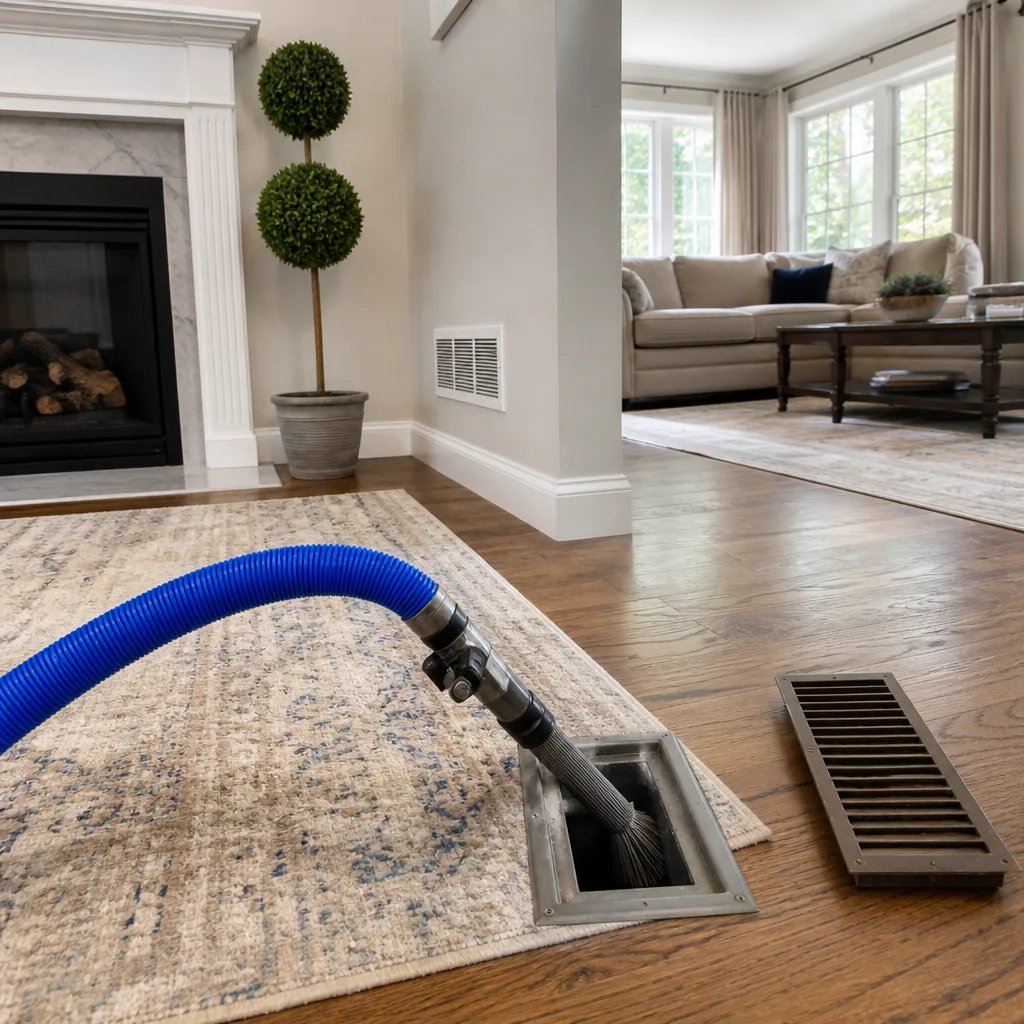 Whole-home duct cleaning
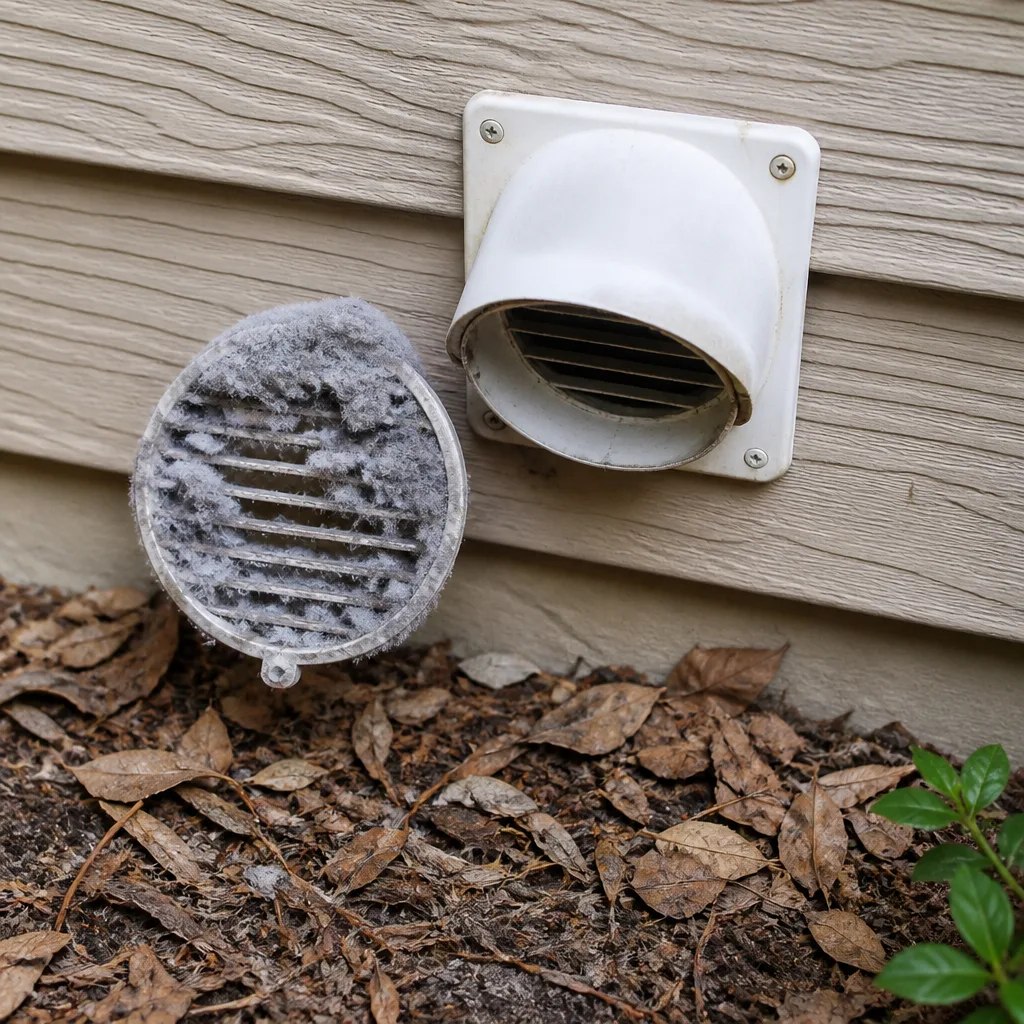 Dryer vent cleaning
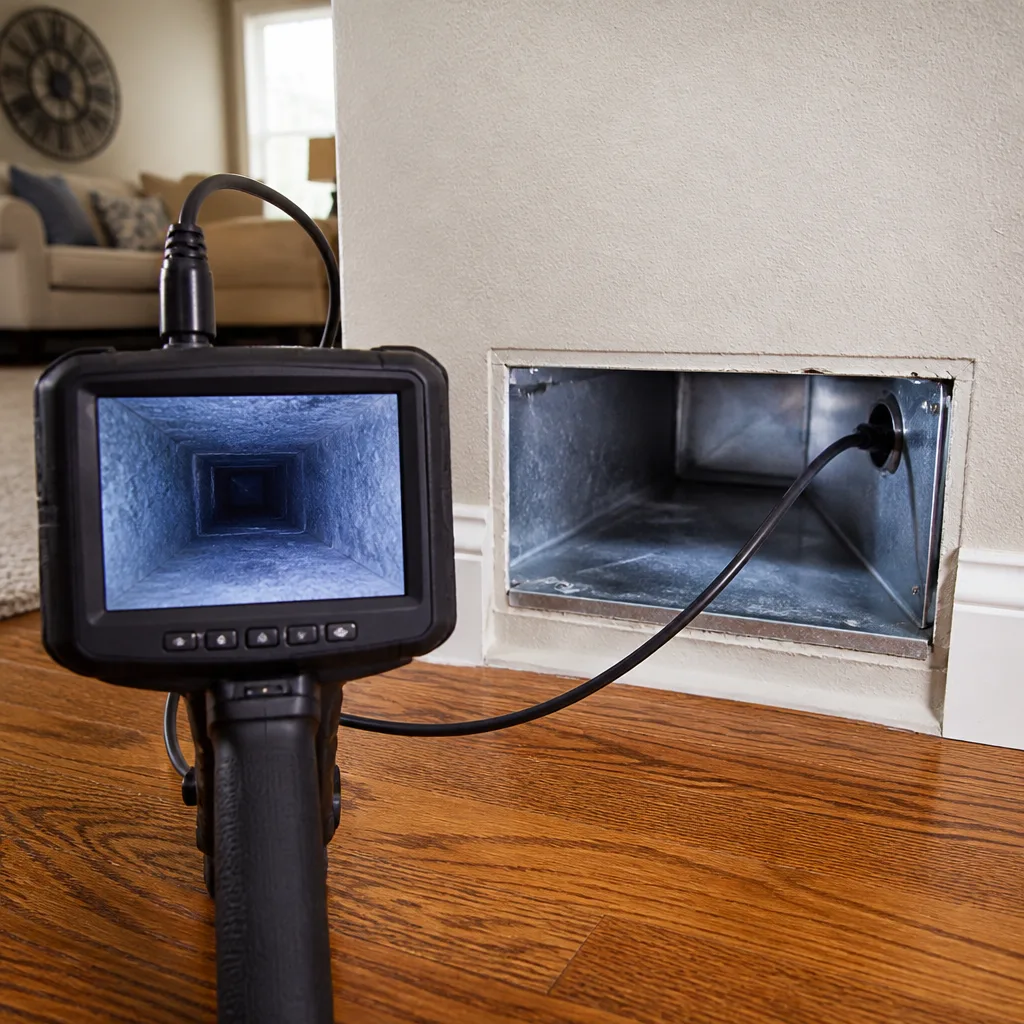 Camera inspection
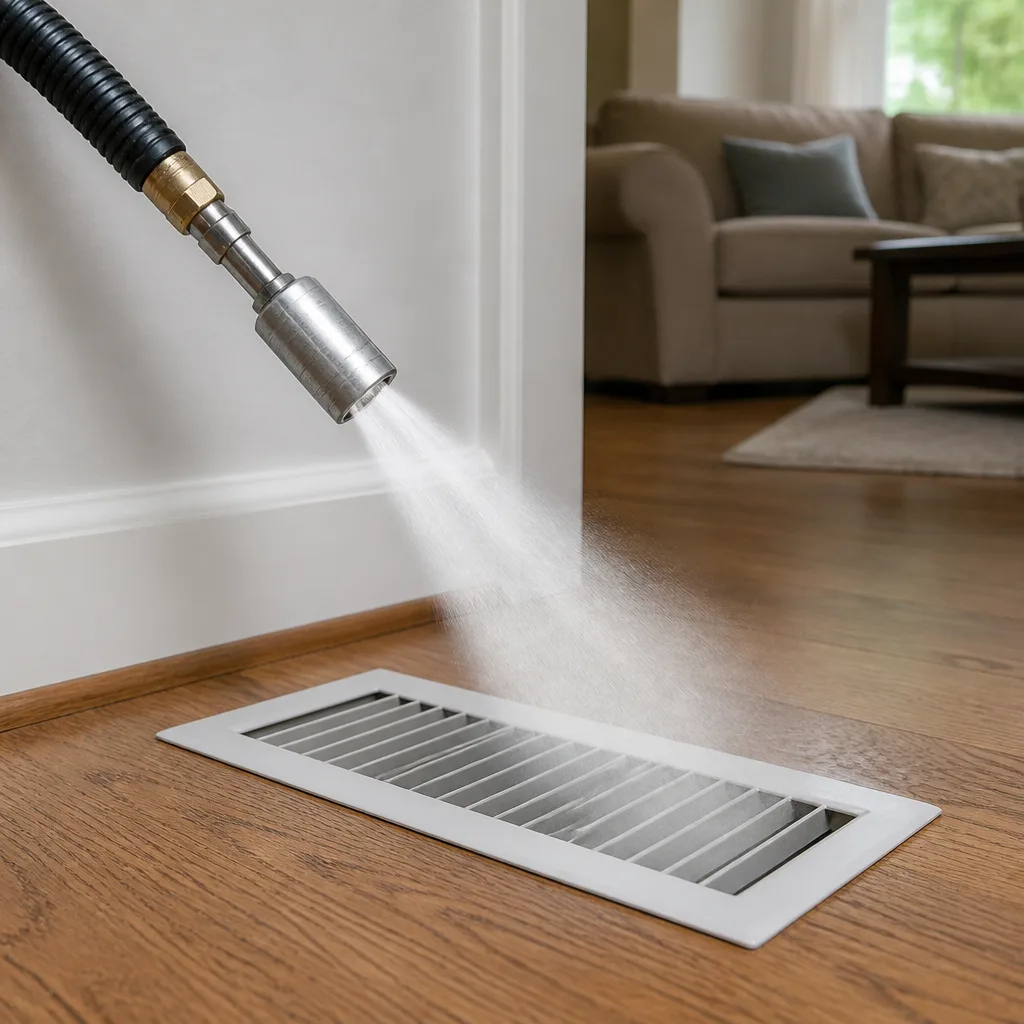 Sanitizing & deodorizing
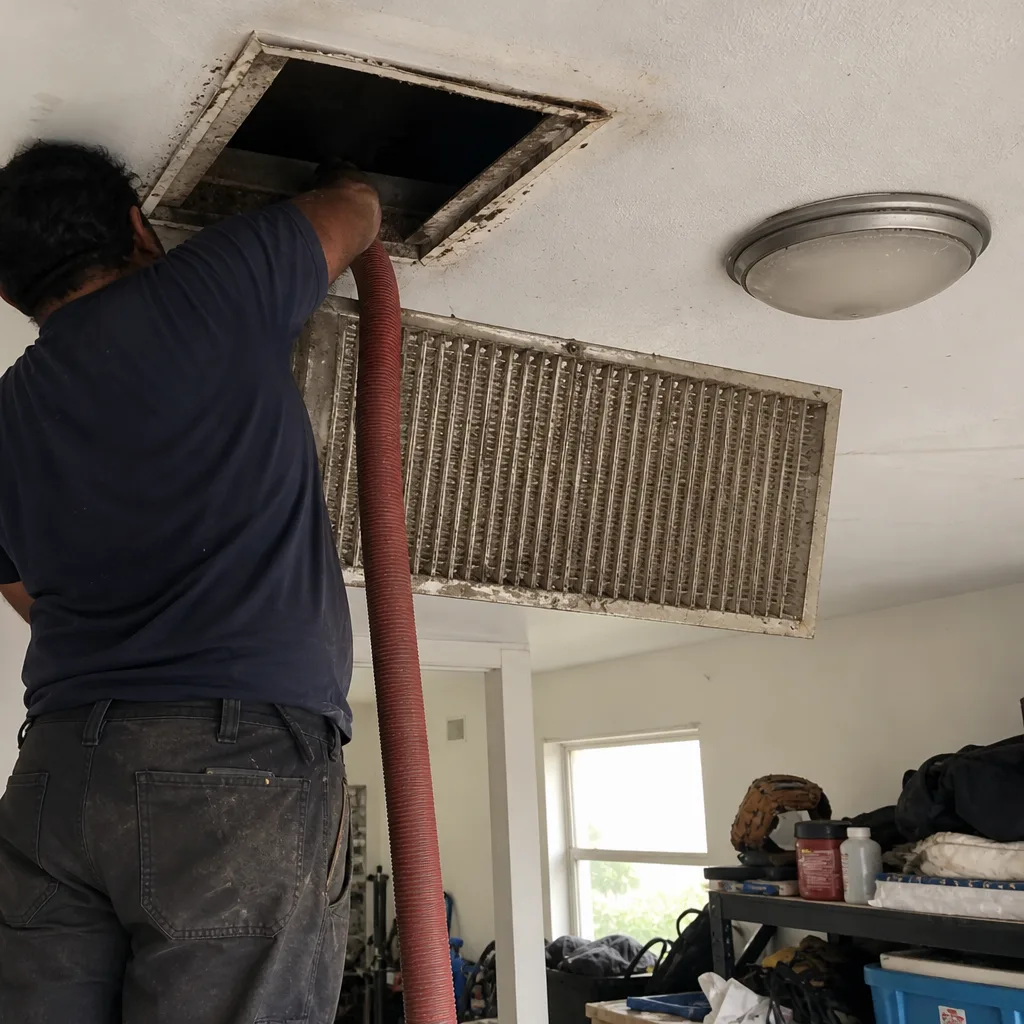
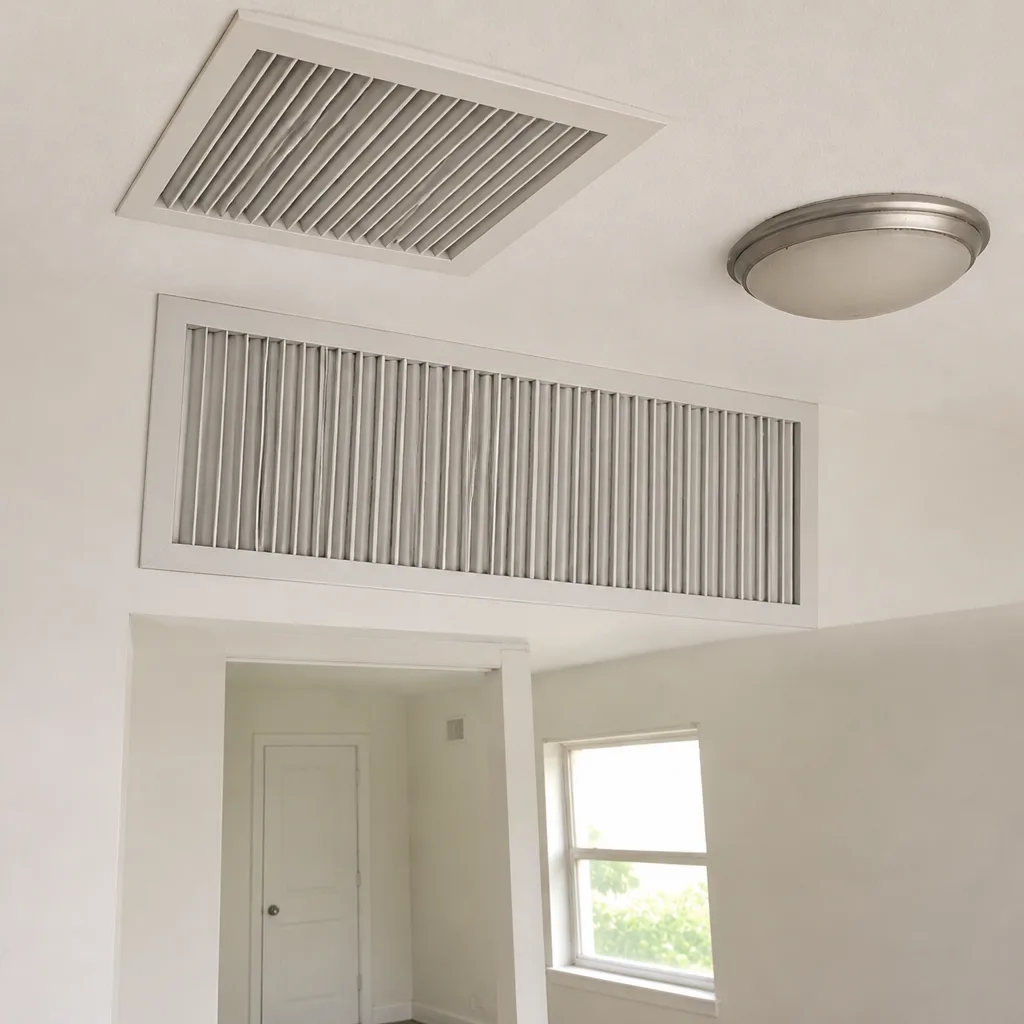
Whole-system duct and dryer vent check with before-and-after photos - you see exactly what came out of your vents
That "$99 whole-house special" is a bait ad - the real number appears once they are in your hallway, or the "clean" is a shop-vac at the register. We photograph the inside of your ducts before and after instead.
The Complete Guide to Air Duct Cleaning in Corpus Christi
Here’s a fact that surprises most homeowners: the dusty, contaminated ductwork you’re worried about is usually a symptom, not the whole problem. In most homes we look at around Corpus Christi, the ducts themselves are fine. What’s failing is the system around them – the return path, the filter cabinet, the seams, the connection at the air handler, or a dryer vent that hasn’t been touched in years. Cleaning solves a symptom. Repair solves the cause. A guide that only talks about cleaning, without addressing the structural problems that let contamination back in, will leave you scheduling another cleaning in two years. This guide covers both, and what a legitimate inspection should actually catch before anyone touches a brush.
Quick Answer
Air duct cleaning in Corpus Christi removes accumulated dust, debris, and microbial buildup from your supply and return ductwork, plus the components inside your air handler that move air through the system. For most homes here, a professional cleaning every three to five years is reasonable, but homes with pets, recent renovations, visible contamination, or persistent musty odors often need it sooner. The cleaning is only as good as the inspection that precedes it – and a written report with before-and-after photos is what separates a real job from a bill.
Styles & brands we work with
- Whole-home duct cleaning
- Dryer vent cleaning
- Camera inspection
- Sanitizing & deodorizing
Table of Contents
- Why Duct Cleaning in Corpus Christi Is Different
- How Long Does a Duct Cleaning Actually Last?
- What a Legitimate Inspection Looks Like Before Any Cleaning
- The Equipment Gap: Portable vs. Professional-Grade Systems
- What a Professional Cleaning Actually Involves, Step by Step
- When Cleaning Isn’t Enough: Duct Repair and Integrity
- The Dryer Vent: Your Most Neglected Fire Risk
- How to Verify the Work Was Actually Done
Why Duct Cleaning in Corpus Christi Is Different
Corpus Christi’s climate puts more hours on a residential HVAC system than almost any other type of climate in the country. The cooling season stretches across most of the calendar, which means the air handler, the supply ducts, and the return plenum are running almost continuously for the better part of the year. That runtime has a direct effect on how ducts degrade and how quickly contamination builds. It’s not the same as a house that runs its system a few months out of the year and lets ductwork sit idle the other eight.
Here’s what that continuous runtime means in practice:
- Moisture never fully settles. In a climate where the air handler is cooling most days, the coil stays wet with condensation through repeated cycles. Ductwork downstream of a wet coil carries humid air that has nowhere to dry out between runs. That consistent moisture feeds microbial growth on duct surfaces in a way colder climates never see.
- Particulate loading compounds faster. Every hour the blower runs, it pulls particulate through the return. In a mild climate with year-round operation, the total particulate load a system handles in a calendar year is higher than most national maintenance schedules assume.
- Windows and doors add their own load. In a market where a lot of homes have older window units, sliding doors, and less-than-perfect envelope seals, unfiltered outdoor air enters through gaps the HVAC filter never sees. That unfiltered air carries whatever is in the ambient air into the return.
Standard national maintenance advice – “clean your ducts every three to five years” – was written for an average American home. In Corpus Christi, a home with pets, a home near active construction, or a home that has been through a roof replacement or major renovation often needs service sooner. The three-to-five-year interval is a starting point, not a promise. A proper inspection is what tells you where your particular home falls on the timeline.
How Long Does a Duct Cleaning Actually Last?
A properly performed cleaning in a Corpus Christi home typically stays effective for two to four years before accumulation justifies another service, assuming the system is otherwise in good condition. A clean-only job that skipped structural defects – torn flex duct, disconnected joints, a compromised filter cabinet – will look dirty again within a single cooling season. What undermines a cleaning isn’t the cleaning itself. It’s the leaks and defects that let contamination back into a system you just paid to clean.
Where a cleaning “wears off” faster than expected, the causes are usually specific:
- An undersized or improperly seated filter. Air bypasses the filter at the edges where the cabinet doesn’t seal tight, pulling particulate straight into the coil and ductwork.
- Disconnected or crushed flex runs in the attic. Attic ductwork sees temperature swings that don’t affect conditioned space, and flex duct that has been walked on, kinked, or pulled loose at a fitting moves unfiltered attic air with each cycle.
- Active construction or renovation dust. If the system is left running during a renovation, the return pulls construction particulate into the entire pathway. Cleaning a system that’s about to be contaminated again is a waste of money.
- Pets, especially multiple dogs or cats. Pet dander and hair load returns heavily, and the continuous runtime here means that load cycles through the system more often.
- Moisture at the air handler. If the condensate line is clogged or the coil pan doesn’t drain properly, standing water creates an ongoing microbial source that no amount of brushing will permanently resolve until the moisture problem is addressed.
The honest answer for timeline is this: a cleaning that lasts depends on whether the system has been inspected and repaired before cleaning, not just whether the technician spent long enough in the attic. We’ve seen cleanings undone in a single summer by a torn flex run that nobody caught. We’ve also seen cleanings last five years in a tightly sealed system that was repaired the first time. The difference is repair, not equipment.
What a Legitimate Inspection Looks Like Before Any Cleaning
Any duct cleaner who is willing to start brushing before they’ve inspected your system is telling you something about how the job will go. A proper inspection takes 20 to 45 minutes and answers three questions: what’s actually in the ducts, how does the air move through this particular system, and are there structural defects that need repair before or after cleaning. If the estimator can’t answer those three questions with specifics, don’t schedule.
Here’s what a legitimate inspection should include:
- A camera inspection of the main trunk and at least two branch runs. A visual check with a flashlight from a supply register tells you almost nothing. A small inspection camera pushed into the trunk lets the inspector see what’s actually coating the duct walls – dust, microbial growth, debris, or construction particulate.
- An assessment of the return path. The return is where the heaviest accumulation lives, and it’s where contamination re-enters the system. Many cut-rate cleanings only service supply registers and skip the return entirely.
- An air-handler cavity and coil check. The air handler is part of the pathway and needs to be inspected, and in most homes it needs to be cleaned too. Any cleaning that stops at the ductwork and leaves the air handler dirty hasn’t addressed the source.
- A check of duct integrity at the joints and transitions. Seams, flex collars, boots at the registers, and the connection to the air handler should all be examined for separation or tears. These defects are why cleaning alone won’t hold.
- A filter cabinet and return-grille check. An improperly sized filter, a missing filter door, or a compromised return grille should be documented and quoted.
- A dryer vent inspection if the vent hasn’t been serviced recently. This is a separate system from the HVAC ductwork but a genuine fire risk, and a professional inspection should include it or recommend it.
After the inspection, you should receive a written or emailed report that describes what was found, what needs to happen, and what the job will cost. If the technician just points at a dirty register and quotes you a price, that’s not an inspection. That’s a sales call.
The Equipment Gap: Portable vs. Professional-Grade Systems
Most homeowners assume any truck or van arriving at the house has professional equipment on board. That assumption is wrong more often than most people realize. There’s a meaningful difference between a portable shop-style vacuum with a brush attachment and the contact-vacuum and negative-air systems used by specialists who do this work as their primary business. In a humid climate like Corpus Christi’s, that difference shows up directly in the result.
Here’s what the two equipment categories actually do:
- Contact-vacuum brushing systems (Rotobrush-style): A rotating brush is fed through the ductwork while a high-volume vacuum captures dislodged debris at the same time. The brush physically contacts the duct walls, which matters because contamination isn’t just resting on the surface – it’s adhered to it. Air alone won’t remove adhered material.
- Negative-air machines (Nikro-style): These create a continuous negative pressure within the duct system during cleaning, so dislodged debris and airborne particulate are contained by the vacuum rather than released into the home. In a humid climate where duct surfaces can carry microbial growth, containment is the whole point.
- HEPA filtration equipment (Abatement Technologies): For jobs where contamination levels are elevated or the environment is post-construction, HEPA filtration captures fine particulate at a higher standard than standard filtration. Not every duct cleaning requires it, but a specialist should have it available.
- Portable vacuums and consumer-grade equipment: Fine for a light surface vacuuming. Insufficient for contact brushing, insufficient for containment during dislodging, and insufficient for microbial contamination. This is what most low-price duct cleanings are using.
Why does this matter more in Corpus Christi? Because humid air and near-continuous runtime combine to create duct conditions that need genuine containment. When a duct surface with adhered microbial growth is agitated by a brush without proper negative pressure, particulate lifts into the air the blower is moving. A portable vacuum can’t keep up with that. A negative-air system with HEPA filtration can. That’s the practical gap.
What a Professional Cleaning Actually Involves, Step by Step
A professional air duct cleaning in Corpus Christi follows a defined sequence. Skipping steps is how cheap jobs get cheap. Here’s the order a genuine cleaning follows:
- Setup and protection. Floor protection at the air handler and register locations. Negative-air equipment positioned and connected to create continuous containment. Register covers removed and labeled so every piece goes back where it came from.
- Access cutting. Small access holes are cut into the trunk and major branch runs as needed so the brush system and vacuum hose can reach every segment. These get sealed after cleaning.
- Air-handler cavity cleaning. The blower wheel, the drain pan, and the interior of the cabinet are cleaned. The blower wheel alone carries a surprising amount of adhered debris, and a dirty blower wheel is a dust distributor even after the ducts are clean.
- Contact brushing of the supply and return. Rotobrush-style brush head fed through each run. Every supply branch, the return trunk, and the return drops. This is where the majority of the time is spent.
- Coil inspection (visual). If the coil is accessible and visibly loaded with debris, that’s a separate service with its own scope and price. A duct cleaning doesn’t include coil cleaning unless it’s specifically quoted.
- Sealing access points. Every cut access point gets sealed so the system returns to its original pressure characteristics.
- Filter replacement or verification. A new filter installed or the existing filter confirmed clean and properly sized.
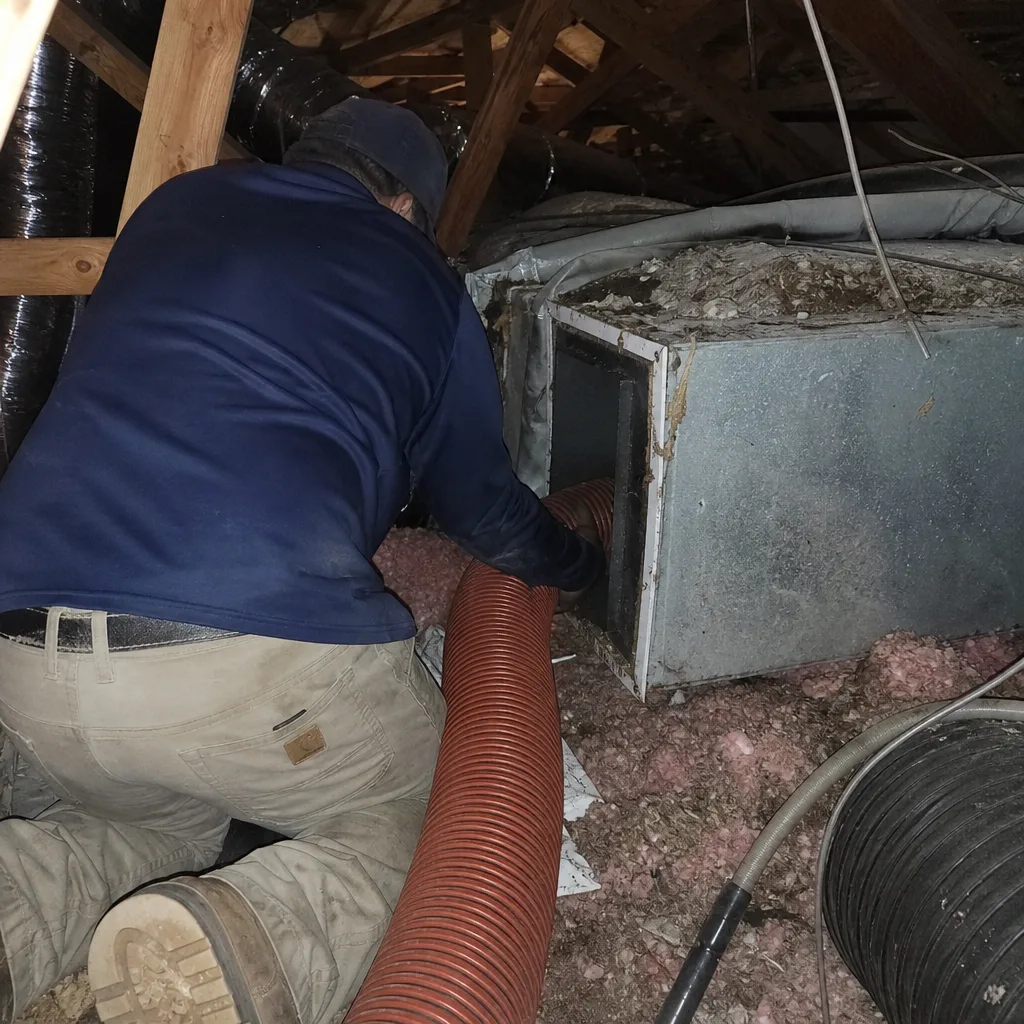
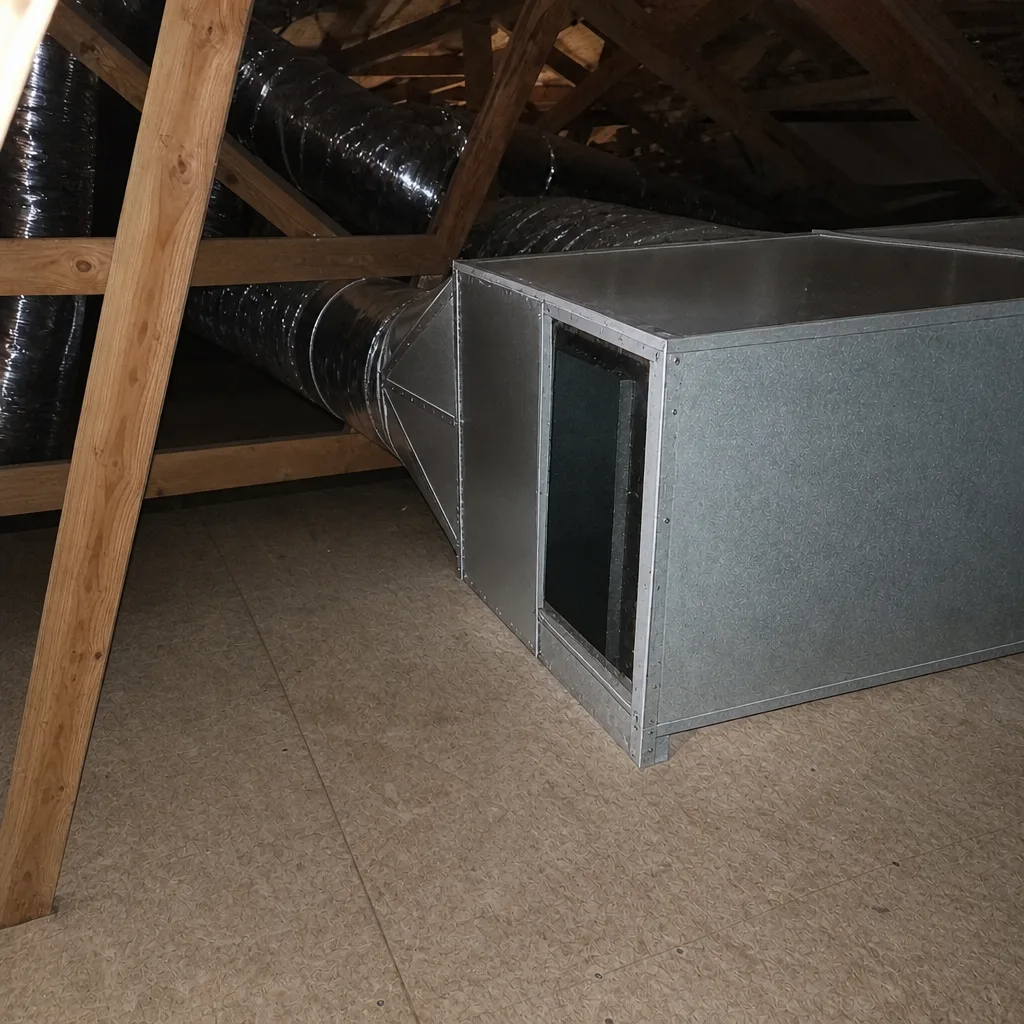
- Before-and-after documentation. Photos taken inside the trunk and at representative branches, delivered to the homeowner. This is the deliverable that tells you the work happened.
The full process for a typical Corpus Christi home takes three to five hours. Homes with multiple air handlers, complex duct layouts, or heavy contamination take longer. If someone tells you the job takes 45 minutes, they’re describing a surface vacuuming, not a cleaning.
When you’re ready to schedule a job, the team at Ironside Duct Cleaning runs this exact process and can walk you through what to expect for your particular system.
When Cleaning Isn’t Enough: Duct Repair and Integrity
The single biggest differentiator between a cleaning that lasts and one that doesn’t is whether the technician addressed duct defects. Cleaning removes contamination. Repair removes the pathways by which contamination returns. If a duct run has a tear at a flex collar, is disconnected from a boot at a register, or is crushed behind a modification, cleaning that run accomplishes very little – the defect keeps reintroducing particulate every time the blower runs.
Common defects we see in Corpus Christi homes:
- Torn or disconnected flex duct. Attic flex runs are the most vulnerable. Rodents, temperature swings, and renovation activity all cause damage the homeowner never sees.
- Separated trunk sections. Original duct-tape seals give out over years, especially where temperature swings run through the attic and the crawl. Separation lets attic air into the system.
- Crushed or kinked branch runs. A branch run flattened during a re-route, a repair, or a furniture install restricts airflow to the room and creates a pressure imbalance that pulls unfiltered air in from adjacent spaces.
- Inadequately sealed air-handler cabinets. Every gap around the filter door, every unsealed seam at the plenum, every unsealed conduit penetration is unfiltered air entering the system.
- Deteriorated duct board or failing internal lining. In some older systems, the internal lining of the ducts has failed and is shedding fibers into the airstream. Cleaning alone doesn’t resolve this; the affected section needs repair or replacement.
A specialist who can clean AND repair is the right call. Most duct cleaning companies refer out structural repair or simply ignore it – which means a homeowner pays for a cleaning that gets undone. Full air duct cleaning work should always include a check for structural defects and honest reporting on what’s found.
The Dryer Vent: Your Most Neglected Fire Risk
Dryer vents are the most neglected part of the indoor air pathway, and they’re the part that carries a genuine safety consequence when they’re not serviced. A dryer vent that hasn’t been cleaned in several years accumulates lint that reduces airflow, overheats the appliance, and – in cases with sufficient accumulation – creates a fire risk. Most homeowners have never had the vent cleaned and don’t know how to tell if it needs service.
Signs a dryer vent needs cleaning:
- Clothes take longer than one cycle to dry. This is the most common early indicator.
- The dryer or the laundry room feels unusually warm during operation.
- There’s a noticeable burning smell during a cycle.
- Lint accumulates around the lint trap housing or visible lint is escaping into the room.
- It’s been more than two years since the vent was last serviced, regardless of how it’s operating.
- The vent terminates at a roof or through a wall at a long distance from the dryer – those runs accumulate lint fastest and are usually the ones that never get cleaned.
dryer vent cleaning is a separate service from HVAC duct cleaning because the system is different, the equipment is different, and the safety case is different. It’s worth taking seriously. Dryer vent lint accumulation is a leading contributor to residential house fires, and the fix is straightforward when it’s caught.
How to Verify the Work Was Actually Done
The single most common complaint we hear from homeowners is that they don’t know whether the cleaning they paid for actually happened. That uncertainty usually exists because the cleaner didn’t provide any documentation before or after the work. A legitimate cleaning always produces a record. Here’s what to demand:
- Before and after photos of the ducts themselves. Not the register, not the floor, not the outside of the van. Photos taken inside the trunk showing the duct surface before cleaning and after. Every cleaning should produce these.
- Photos of the air-handler cavity before and after. The blower wheel and cabinet interior – those are the easiest places to see the actual result.
- A written scope of work. What was cleaned (supply, return, air handler, dryer vent if applicable), what access points were cut and sealed, what repairs were performed, what filter changes were made.
- Photos of cut access points before and after sealing. This confirms the system went back together properly, not that it was left open for the next call.
- An itemized invoice matching the quote. The number you agreed to in the estimate before work began should match the invoice you receive after the work is done. If they differ, that’s a problem.
A company that can’t produce before-and-after photos, an itemized written scope, and an invoice that matches the quote hasn’t done a professional cleaning. The documentation isn’t a nice extra. It’s the difference between a service and a scare.
Common Mistakes to Avoid
- Booking based on the lowest quote. A $99 or $149 “whole house” price in Corpus Christi doesn’t cover the labor and equipment cost of a genuine cleaning. What those calls turn into is a technician on site finding “problems” that justify a much larger invoice. Get a written scope, not a coupon price.
- Not asking where the equipment came in. If the technician arrives with a shop-style vacuum and not a negative-air system, the cleaning will agitate particulate without containing it. Ask what equipment they’re using.
- Letting the work happen without a camera inspection first. A cleaning without an inspection is a guess. If the estimator can’t tell you what’s in the ducts before they quote the price, they don’t know what they’re quoting.
- Ignoring the air handler. Cleaning ducts while leaving a dirty blower wheel and coil in the air handler is like washing half a car. The air handler is part of the pathway.
- Skipping the dryer vent year after year. Lint is a fire risk and it accumulates slowly enough that most homeowners never think about it until the dryer starts taking two cycles to dry a load.
- Cleaning without addressing duct defects. Torn flex, disconnected runs, and unsealed cabinets are the reason a cleaning doesn’t hold. Ask specifically whether duct integrity was assessed.
- Running the system during a renovation. If a home is under construction or major renovation, running the HVAC pulls construction particulate into the whole system. Shut the system down, or accept that a cleaning is coming and plan the timing.
See the difference
 Before
 After
 Before
 After
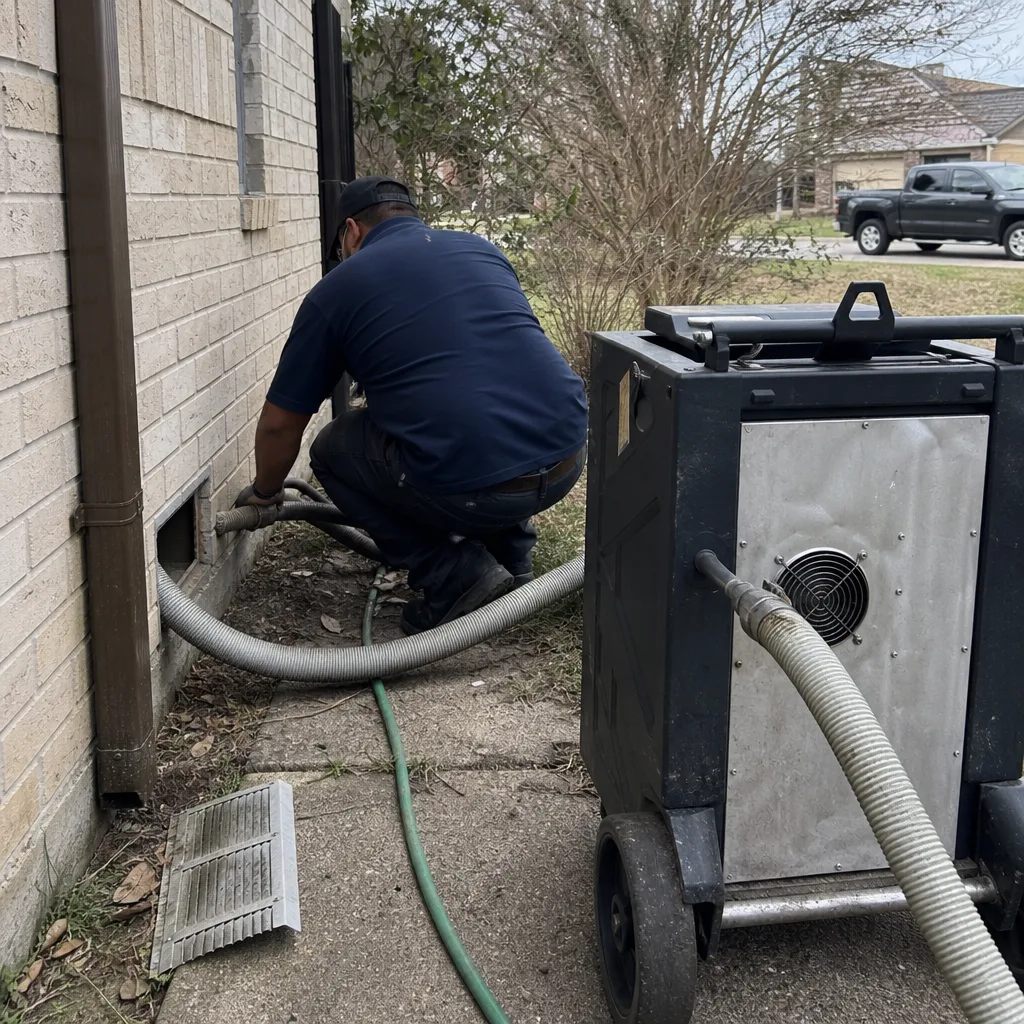 Before
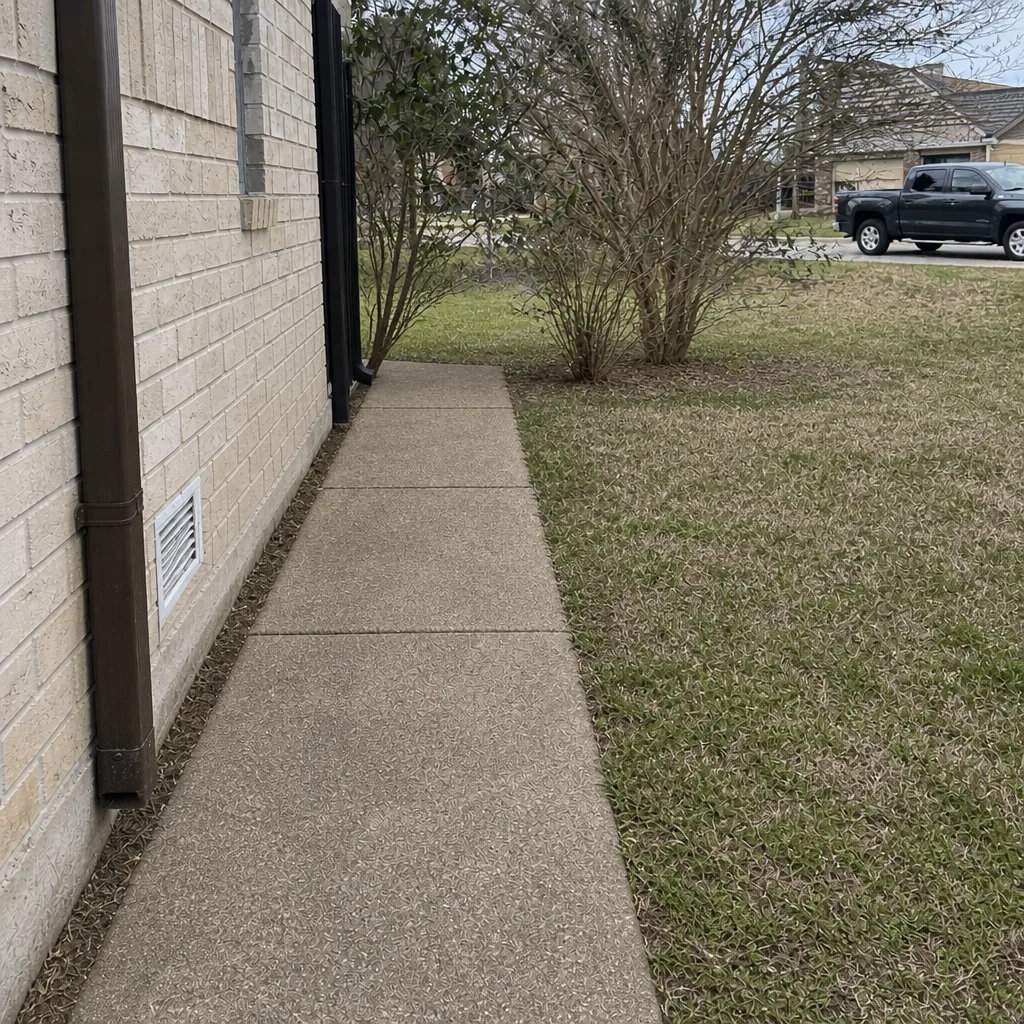 After
When to Call a Professional
Most homes don’t need a duct cleaning every year. But some specific scenarios shouldn’t wait. Call a professional if you’re seeing visible dust discharging from the registers when the system kicks on, if there’s a persistent musty or chemical odor that doesn’t clear when the system runs, if the home has recently been through a major renovation or roof replacement, if you’re bringing in a new baby or managing an allergy in the household, if the dryer takes more than one cycle to dry a load, or if it’s simply been more than three to five years since the system was last serviced. If any of those apply, an inspection is worth scheduling. Ironside Duct Cleaning offers free estimates in Corpus Christi – call (833) 435-2252 to schedule one.
Frequently Asked Questions
Typical whole-system air duct cleaning in Corpus Christi runs several hundred dollars for a standard single-system home, pricing by whole system rather than per vent. Larger homes with multiple air handlers, heavy contamination, or added dryer vent service push that higher. The written estimate you receive before work begins is the number you pay – no per-vent pricing, no surprise add-ons. Call (833) 435-2252 for an exact quote – estimates are free.
Visible dust in the living space is a late indicator, not a trigger. Duct contamination can build for years in the attic and return path without showing up in the rooms. A camera inspection is what tells you whether cleaning is warranted – the visible-dust threshold is the wrong metric.
Every three to five years is the general baseline for most homes here, with additions for pets, recent renovation, or a system that hasn’t been inspected in that window. Homes with continuous runtime and no added filtration often fall on the shorter end. An inspection every few years is the reliable way to know.
Cheaper quotes exist because the scope is smaller. Portable vacuums instead of negative-air systems. No camera inspection. No air-handler cleaning. No repair of duct defects. The low number looks like a deal until the technician is on site and “finds” problems that justify a larger invoice. Ask what’s included before you compare prices.
Yes, in the sense that removing accumulated microbial growth, dust, and particulate from the airstream reduces the sources generating odors and airborne irritants. What cleaning cannot do is fix a moisture problem at the air handler or a duct defect that reintroduces contamination. Both need to be addressed for the result to hold.
We serve homes throughout Corpus Christi and the surrounding area. Call (833) 435-2252 with your address and we’ll confirm availability and give you a free estimate. We answer 24/7. Fast dispatch from 7am to 7pm, Sunday through Friday.
The Bottom Line
Duct cleaning isn’t a mystery service – it’s a sequence anyone can follow if they know what to demand. A camera inspection before any quote. A written scope that includes the air handler. Contact-brush equipment with real negative-air containment. Repair of duct defects so the cleaning holds. Before-and-after photos and an invoice that matches the quote. And a dryer vent check that treats lint accumulation as the fire risk it is. In Corpus Christi’s climate, where the system runs most of the year and moisture never fully settles, those steps aren’t a premium upgrade. They’re the difference between a cleaning that lasts three years and one that’s undone by the next cooling season.
If you’re ready to have your system looked at honestly, the team at Ironside Duct Cleaning can inspect, clean, and repair the full air pathway in one visit. Our technicians have up to 12 years of experience with Rotobrush and Nikro equipment, and we handle the whole system – cleaning, repair, and the filtration equipment in between. Call (833) 435-2252 for a free estimate. We answer 24/7. Fast dispatch from 7am to 7pm, Sunday through Friday.
Written by the team at Ironside Duct Cleaning.