
Last updated November 14, 2026
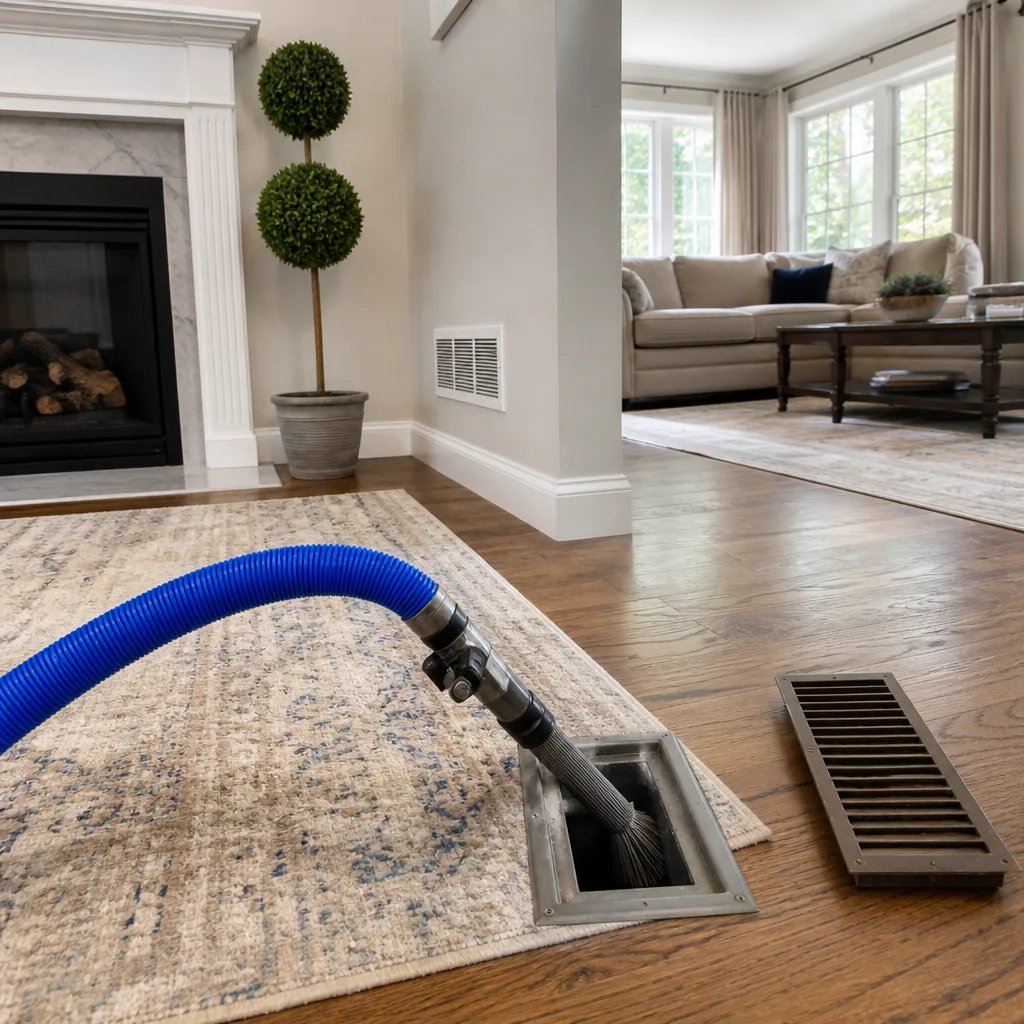 Whole-home duct cleaning
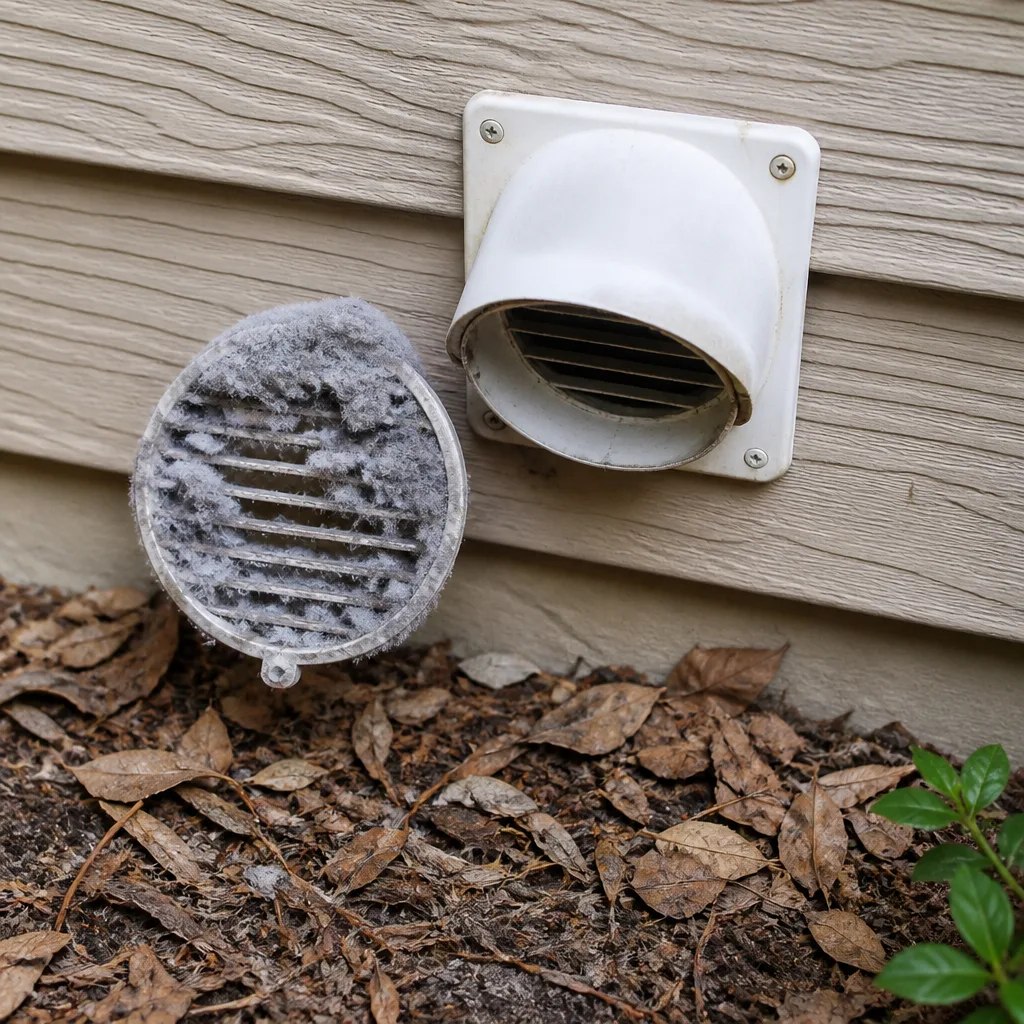 Dryer vent cleaning
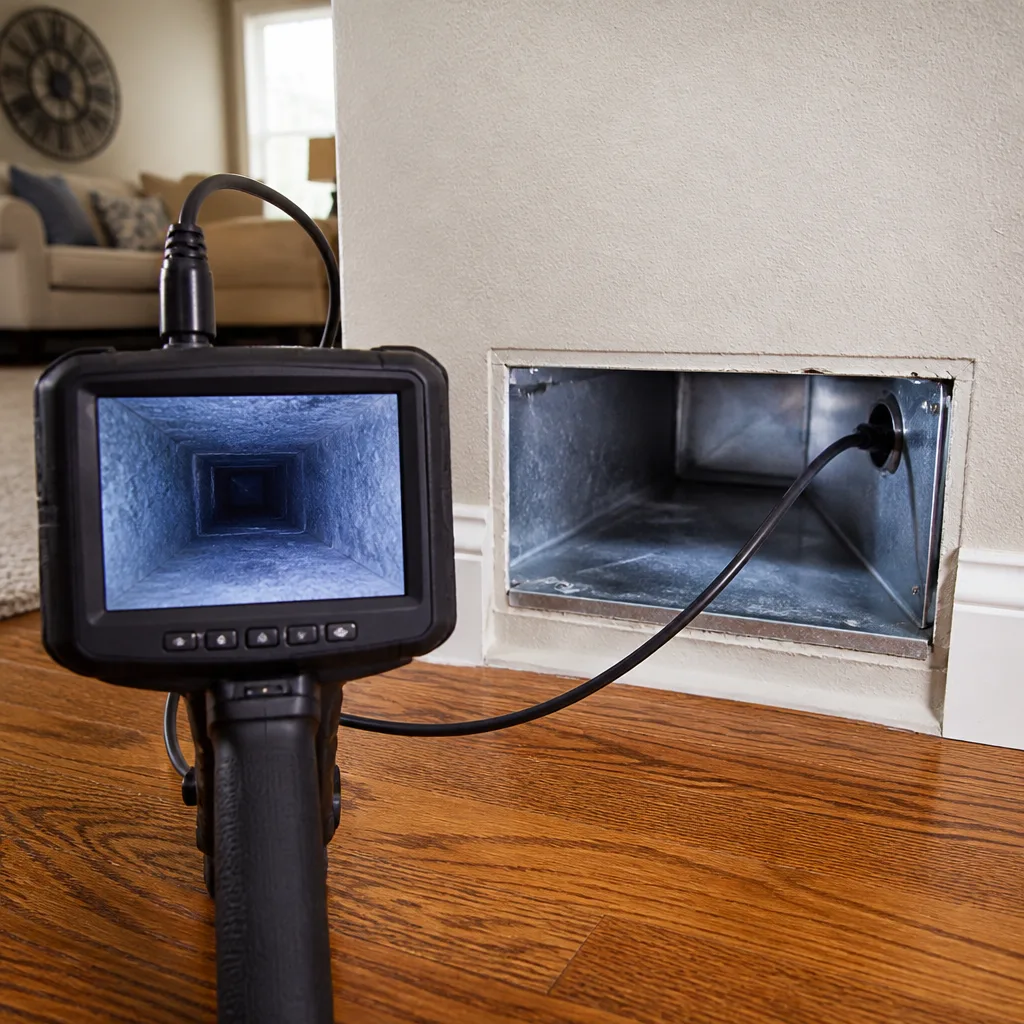 Camera inspection
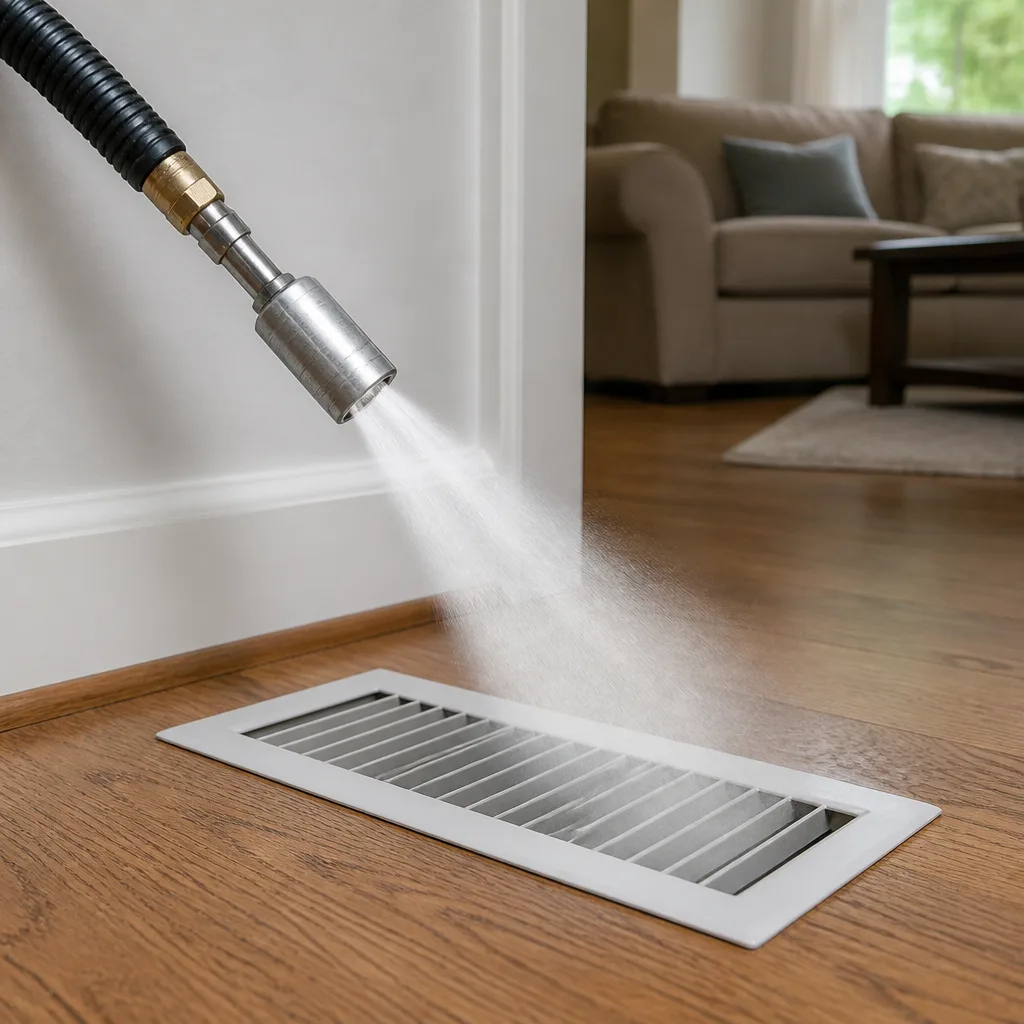 Sanitizing & deodorizing
Whole-system duct and dryer vent check with before-and-after photos - you see exactly what came out of your vents
That "$99 whole-house special" is a bait ad - the real number appears once they are in your hallway, or the "clean" is a shop-vac at the register. We photograph the inside of your ducts before and after instead.
Air Duct Cleaning Warning Signs: A Corpus Christi Homeowner’s Reference Guide
The most serious duct problem in a Corpus Christi home usually isn’t a visible pile of debris at a register. It’s a slow buildup happening inside the duct system that produces no dust you can see and no smell you can name, quietly changing the air your family breathes for months before anything shows up on a grille. By the time dust reaches the supply registers, the contamination behind it has typically been growing for a while. This guide maps the real signals Corpus Christi homeowners run into: what a musty smell on AC startup actually points to, how to read humidity numbers as clues about duct leakage, which symptom patterns track with duct contamination versus outdoor allergens, and how to document what you’re seeing before you call anyone.
Quick Answer
Air ducts in Corpus Christi most often need cleaning when you notice a musty smell at AC startup, humidity that stays high indoors even when the system runs, visible dust or dark staining at the registers, or allergy symptoms that flare when the AC first comes on. Visible dust is a late signal, not an early one. The earlier signs are sensory and mechanical, and they’re the ones worth acting on first.
Styles & brands we work with
- Whole-home duct cleaning
- Dryer vent cleaning
- Camera inspection
- Sanitizing & deodorizing
Table of Contents
- Why a Musty Smell on AC Startup Is a Specific Diagnostic Signal
- How to Tell Filter Problems From Duct Restrictions
- Reading Humidity as a Proxy for Duct Leakage
- Allergy Patterns That Point to Duct Contamination
- Visible Register and Grille Conditions Worth Photographing
- Dryer Vent Warning Signs That Get Overlooked
- How to Document Your Ducts Before a Professional Assessment
Why a Musty Smell on AC Startup Is a Specific Diagnostic Signal
A musty smell that appears in the first few seconds after the air handler kicks on is one of the most useful clues a duct system gives you. It’s specific. It comes from somewhere inside the duct path, not from the room, and it shows up at startup because that’s when air moves through the entire system at once and pushes stale, moisture-laden air past the return and into the living space.
In Corpus Christi, the surrounding environment is warm and humid for most of the year. That matters because the inside of a duct system acts like a controlled microclimate. Flex duct with even a small tear, a poorly sealed joint, or a disconnected run can pull in outside air that carries humidity. That moisture settles on interior surfaces. Combined with dust and organic particles already in the airstream, it creates the conditions for biological growth. The smell doesn’t always mean a visible colony. It can come from a light film that’s spread across the interior of flex duct and never produces anything you’d see at a register.
What the smell typically indicates structurally:
- A moisture source in the duct path – a leak, a gap at a joint, or a run that passes through an unconditioned space like an attic where humidity and heat are higher.
- Interior surface contamination – dust that has settled and become damp enough to support growth.
- A return-side problem – returns are often the most contaminated part of a system because they pull air through the house first.
Not every smell is a musty biofilm. A metallic or rubbery smell can be a mechanical issue and belongs with a qualified HVAC technician, not a duct cleaner. A smell that only appears on the first cool morning of fall can be conditioned air meeting a system that sat unused or changed humidity. But a smell that shows up consistently on AC startup, week after week, points inward to the ducts.
How to Tell Filter Problems From Duct Restrictions
Weak airflow at the registers gets blamed on dirty ducts far more often than the ducts deserve. Before calling anyone, you can usually separate a filter problem from a duct-restriction problem yourself, and that saves you both time and money.
Start here:
- Check the filter. Pull the filter and hold it up to a light. If light barely passes through, it’s loaded and the airflow problem may end right there. Replace it and run the system for a day.
- Note which rooms are weak. A single weak register that never gets strong air points to a branch run that’s disconnected, crushed, or restricted. Weak airflow at every register points upstream, to the air handler, the main trunk, or the filter.
- Listen at each register. A whistle or hiss means restriction. Nothing at all can mean a run has come loose or the damper in that branch is closed.
- Check the return grille. A return that’s been blocked by furniture or a rug will starve the system and make every supply register feel weak.
- Compare before and after a filter change. If airflow improves noticeably with a new filter, you had a filter problem. If nothing changes, look to the ducts.
In Corpus Christi homes with flex duct run through hot attics, crushed or pinched runs are common. Flex duct doesn’t like tight turns, and a run that was fine at install can flatten over time. That’s a duct-repair issue, not a cleaning issue, and the two need to be handled by someone who does both. Our air duct cleaning work starts with exactly this kind of check, because cleaning a system with a crushed run leaves you with clean ducts and the same weak airflow.
Reading Humidity as a Proxy for Duct Leakage
Humidity inside a Corpus Christi home is a useful, underused diagnostic signal. The ambient outdoor moisture here is high for much of the year, and a well-sealed duct system should mostly keep that outside air out of the living space. When indoor humidity stays stubbornly high while the AC runs, it can mean the system is pulling in outside air it shouldn’t.
How to use this in practice:
- Pick up an inexpensive hygrometer and place it in a central room away from vents and sunlight.
- Take readings over a full week, at the same times each day, so you have a baseline rather than a single number.
- Compare readings with the system running versus off. If indoor humidity climbs when the AC is running, and outdoor humidity hasn’t spiked, that’s a signal worth investigating.
- Watch for pockets of higher humidity in specific rooms, which can point to a specific branch run or a return that’s pulling from a humid attic space.
A leaking duct system works against your air conditioner in two ways. It pulls humid outdoor air in, and it lets conditioned air escape into spaces that don’t need it. Both make the system run longer, which is a cost signal, but more importantly it keeps the indoor environment humid, which is the condition duct contamination needs. Humidity readings aren’t a definitive diagnosis, but they’re the kind of baseline documentation that helps when you do call a professional.
Our technicians use negative-air equipment from Nikro and brushing systems from Rotobrush for a reason: a system with a moisture problem needs more than a surface pass. If the underlying cause is a compromised run, we’ll flag it and recommend air duct repair alongside the cleaning, because cleaning alone won’t close a leak. Where those two paths meet, filters and dehumidification equipment from Honeywell or Aprilaire play a part, and knowing that equipment helps us see the whole system rather than just the inside of a duct.
Allergy Patterns That Point to Duct Contamination
Allergy symptoms alone don’t tell you much, because Corpus Christi’s outdoor allergen calendar is active enough on its own. What separates a duct problem from seasonal allergies is timing and pattern. Contamination-driven symptoms tend to track with system operation, not with the pollen count.
Patterns worth paying attention to:
- Symptoms flare in the first ten minutes after the AC comes on, then ease as air moves through.
- One or two rooms are worse than the rest of the house, matching the weak or smelly registers.
- Symptoms don’t track with outdoor pollen counts or follow your neighbors’ experience of the same season.
- Morning symptoms in a bedroom that resolve after the person leaves the room, especially where the supply register points toward the bed.
- A pattern of symptoms across multiple occupants that starts when the system starts.
Compare that with outdoor allergen patterns, which track with the season, affect you outside as much as inside, and don’t change when the thermostat clicks over. If the timing of symptoms is tied to your air handler, it’s reasonable to ask whether the air it’s moving is clean. That’s a question our dryer vent cleaning and duct cleaning work can help you answer concretely, because we inspect the full air pathway and show you what we find.
We’re not diagnosticians and we don’t make health claims. What we can do is document what’s inside your duct system and remove it, which is one less variable in a household with ongoing symptoms.
Visible Register and Grille Conditions Worth Photographing
Visible signs at the registers are the latest signal on this list, but they’re also the easiest to document. A visible problem at a register usually means there’s more behind it, and material that’s been sitting since the last cleaning cycle tells the story of the whole system.
What to look for:
- Dark staining or discoloration on the face of a register or around the frame.
- Visible dust on the inside vanes that returns after you wipe it down within a couple of weeks.
- Grime lines at the seams between the grille and the drywall or ceiling.
- Soft debris or fibers visible with a flashlight inside a return grille.
- Moisture or condensation at the register or on nearby surfaces.
Photograph each of these before and after you clean, and note the date. A before-and-after photo from the same register tells a technician, and you, more than any description. A line of dust that disappears and then reappears within two weeks is a different signal from one that builds slowly over a year. The reappearance is what usually motivates people to call, because it means the system behind the grille is still dirty.
When our technicians finish a cleaning, they take their own before-and-after photos of the ducts, not just the registers, so you can see the work. That’s a standard part of how we handle every job, and it’s one of the reasons we walk through the system with you before any work begins.
Dryer Vent Warning Signs That Get Overlooked
The dryer vent is part of your home’s air pathway, and it’s the one with a fire risk attached. A dryer vent that hasn’t been serviced in a long time is a safety concern, not just an airflow concern, and the warning signs are easy to mistake for appliance problems.
Signs a dryer vent needs attention:
- Clothes take longer than one cycle to dry, especially with a heavy load.
- The dryer itself gets hot to the touch around the drum or top.
- A burning or musty smell during a cycle.
- Lint visible around the outside vent flap or in the laundry room.
- The exterior vent flap doesn’t open during a cycle, or no warm air comes out.
- The last cleaning is more than a year back or not known at all.
We treat the dryer vent as a separate job from duct cleaning because it is one: different equipment, different access, different risk. Where the ductwork has a structural problem we can’t clean around, our repair capability covers it. Where the dryer vent is heavily loaded, cleaning it removes the material a fire needs. If your dryer vent hasn’t been touched in years, that’s one of the clearest warning signs on this whole list, and it’s worth checking before the next load runs.
How to Document Your Ducts Before a Professional Assessment
Good documentation makes a professional assessment faster and more accurate, and it protects you from a vague “you need this” with nothing behind it. The goal here is to give a technician a clear story of what you’ve noticed and when.
A simple documentation routine:
- Photograph every register and grille from the same angle, with a note of the room.
- Note any smells and record when they show up: at startup, after a filter change, on a particular day of the week.
- Log humidity readings over a week at the same times each day.
- Record filter changes with the date and the filter model.
- Write down which rooms have weak airflow, and whether it’s new or long-standing.
- Note when the last duct cleaning or dryer vent cleaning happened, or confirm it never has.
- Keep the documentation together and hand it to the technician when they arrive.
When we come out for an estimate in Corpus Christi, we walk through what you’ve documented, then show you what we find using our inspection and brushing equipment. The written estimate we give you sets the price for the job, and it’s agreed before any work starts. There are no per-vent prices and no surprises once the job is underway.
Common Mistakes to Avoid
- Waiting for visible dust at the registers. Dust you can see is a late signal. By that point, interior contamination usually has a head start. Watch for smells and humidity first.
- Cleaning around a crushed or disconnected run. If a branch duct is pinched, crushed, or pulled loose, cleaning the system leaves the reason for the airflow problem in place. Repairs belong in the same visit.
- Confusing a filter problem with a duct problem. A loaded filter can make every register feel weak and send you looking for a duct solution you don’t need. Change the filter and check again before calling anyone.
- Using a short vacuum hose and calling it a cleaning. Consumer-grade equipment can’t reach the interior of the whole system. Professional contact-vacuum brushing and negative-air equipment are what keep the debris moving and contained.
- Skipping the dryer vent because the dryer still works. A dryer that’s drying the laundry doesn’t mean the vent is clear. Slower cycles and a hot dryer are the signs to catch.
- Trusting a quote with no walkthrough. A per-vent price taken over the phone can’t account for what a system actually needs. A written estimate agreed before the work begins is what protects you.
- Ignoring high indoor humidity because it’s normal in Corpus Christi. High ambient humidity is normal here. High humidity that holds indoors while the AC runs is not, and it deserves a closer look at the duct system.
See the difference
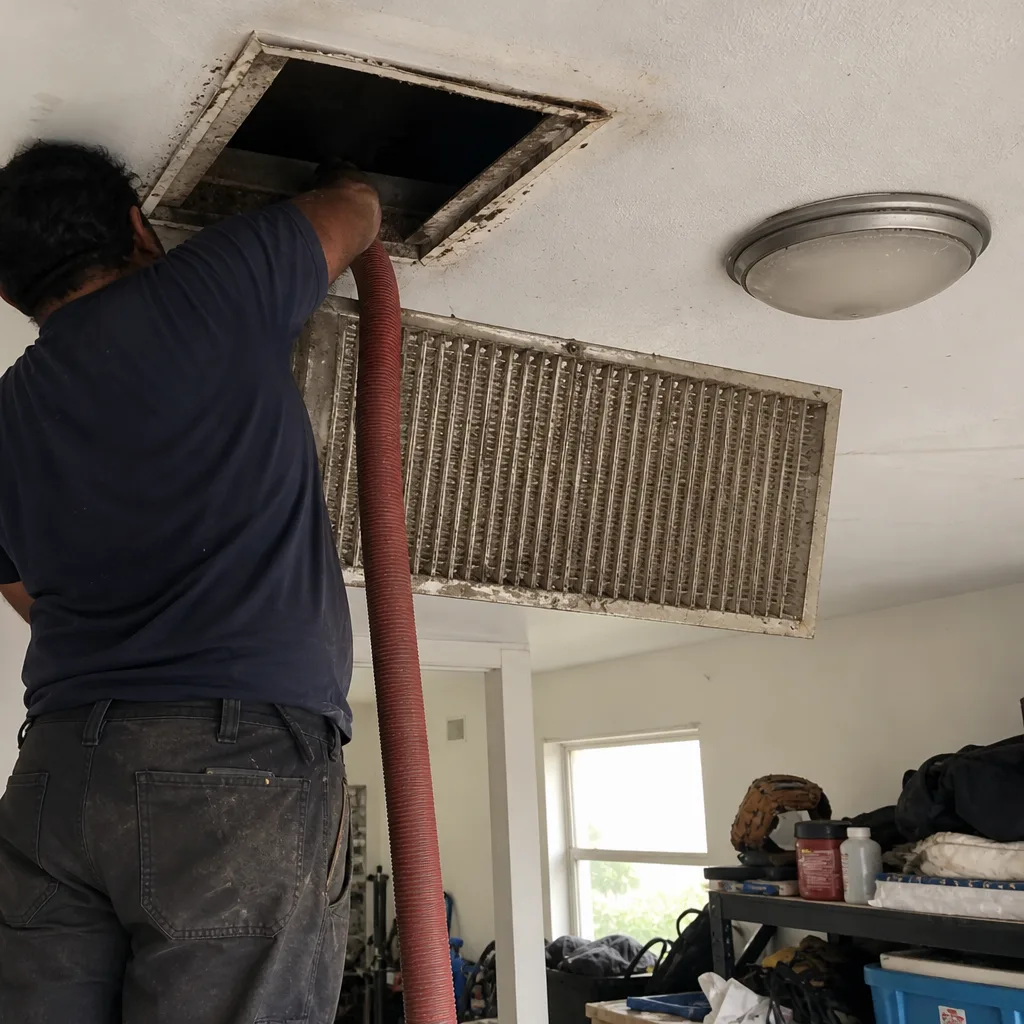 Before
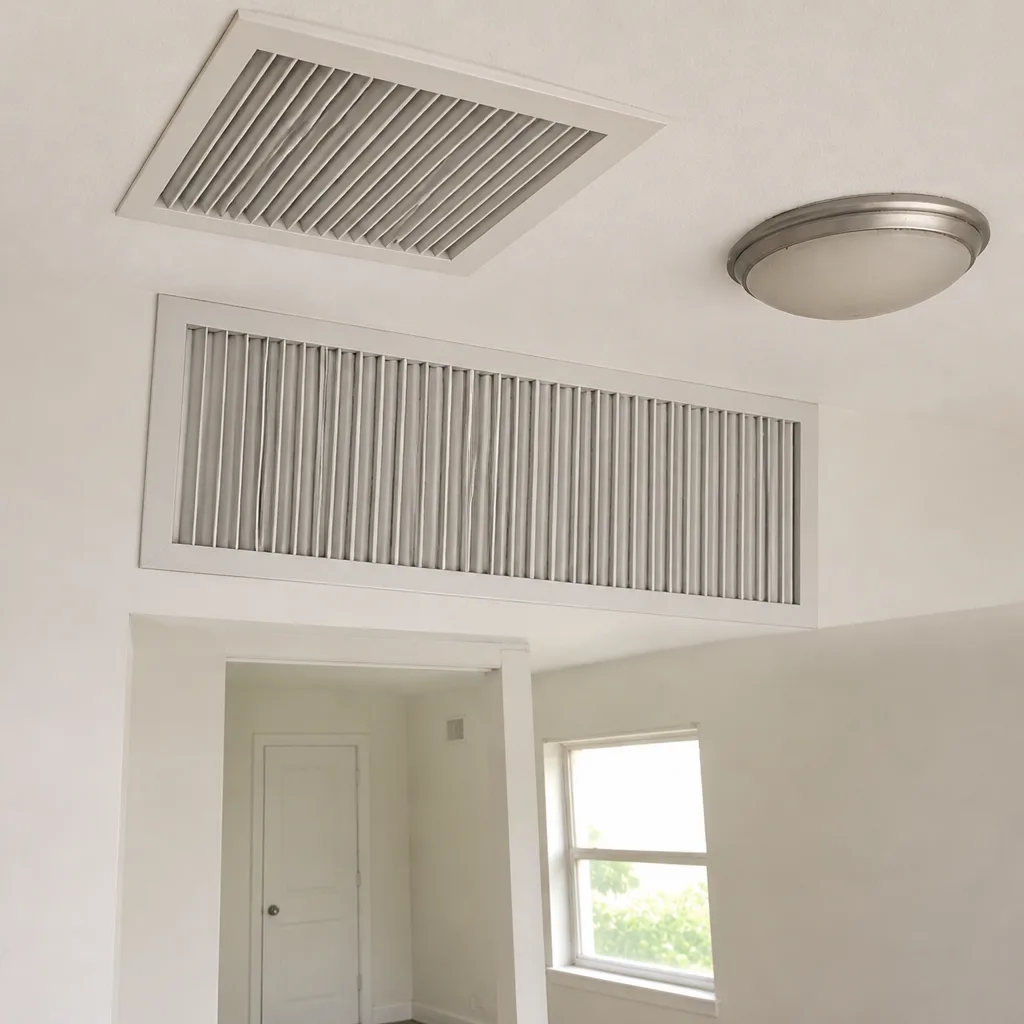 After
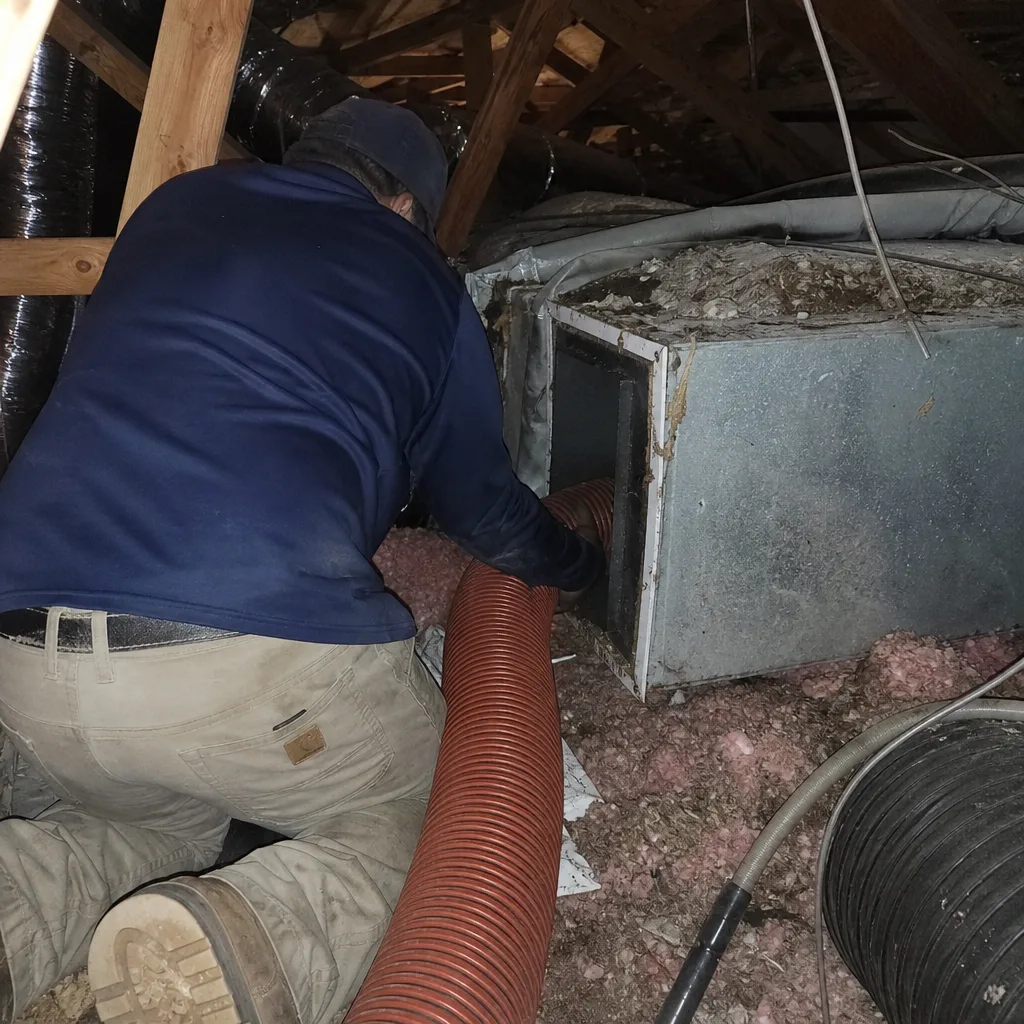 Before
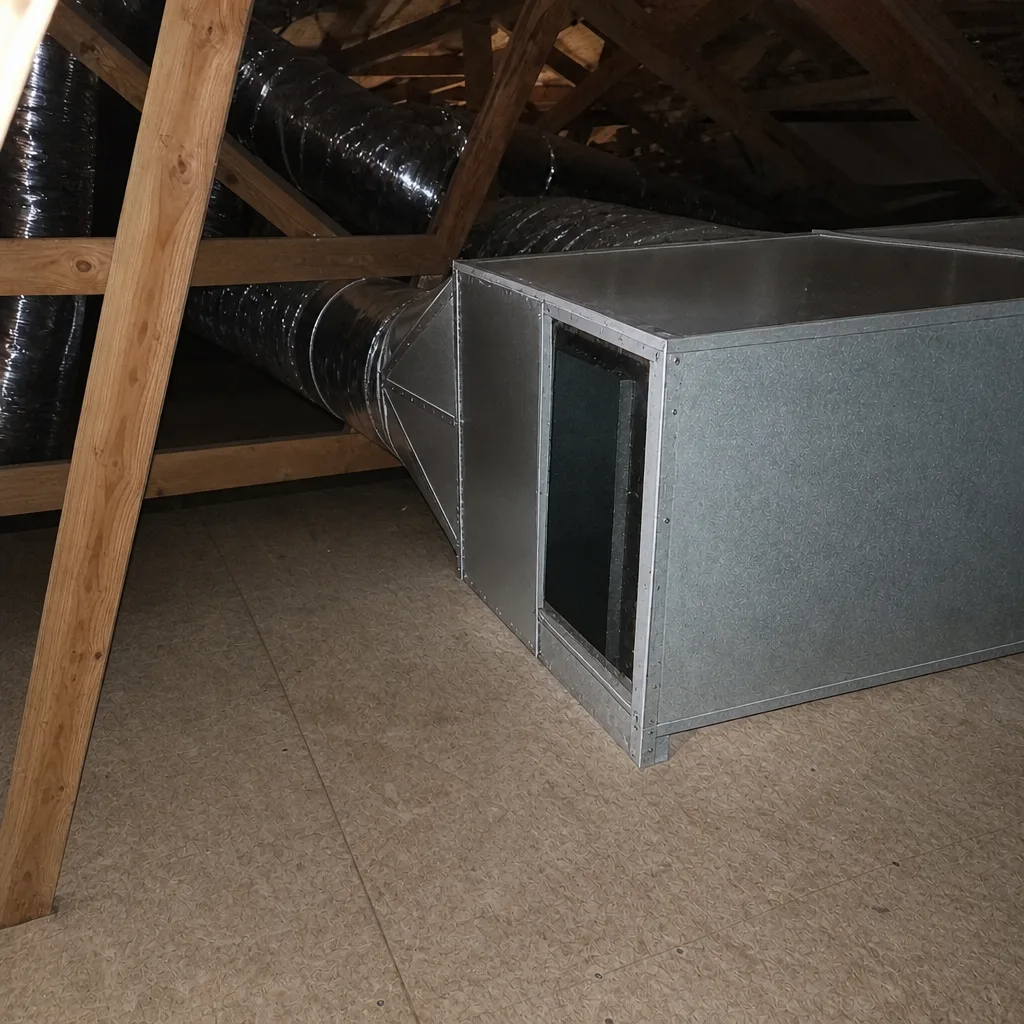 After
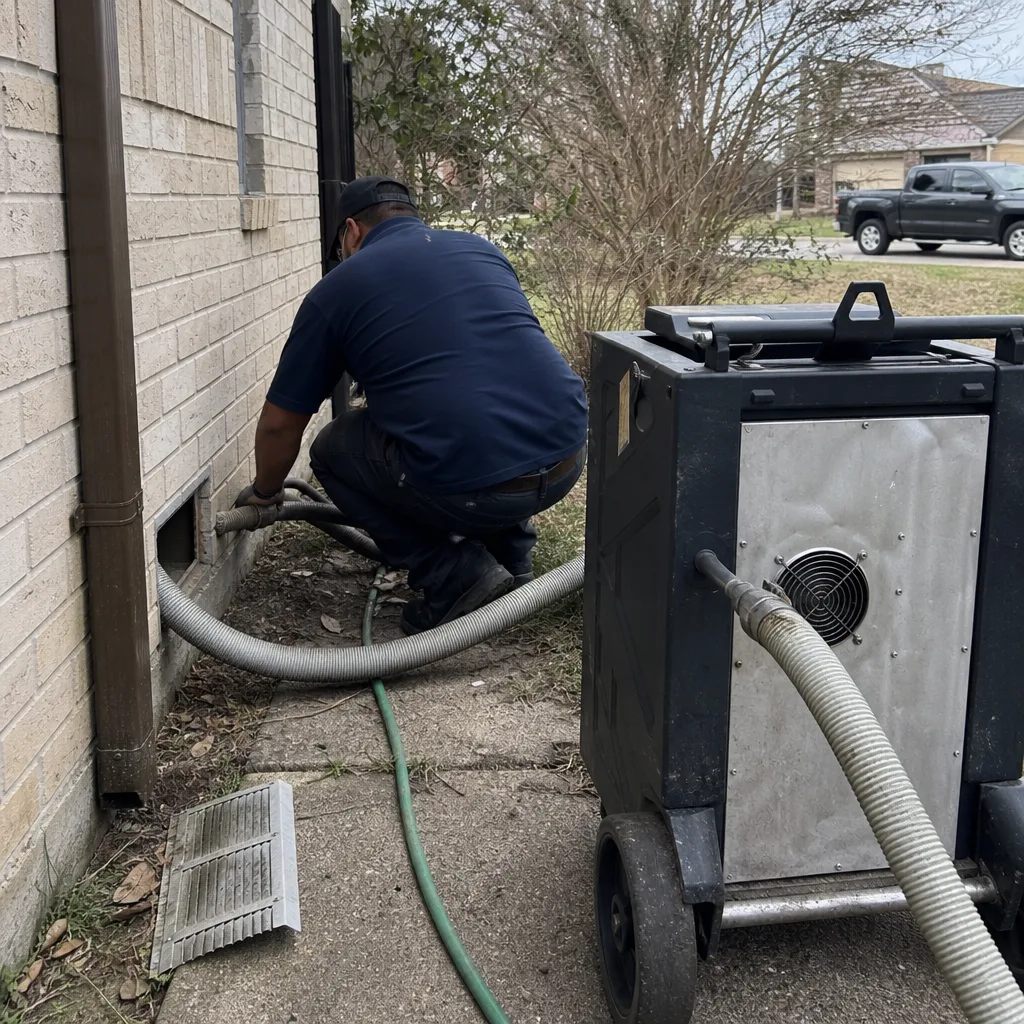 Before
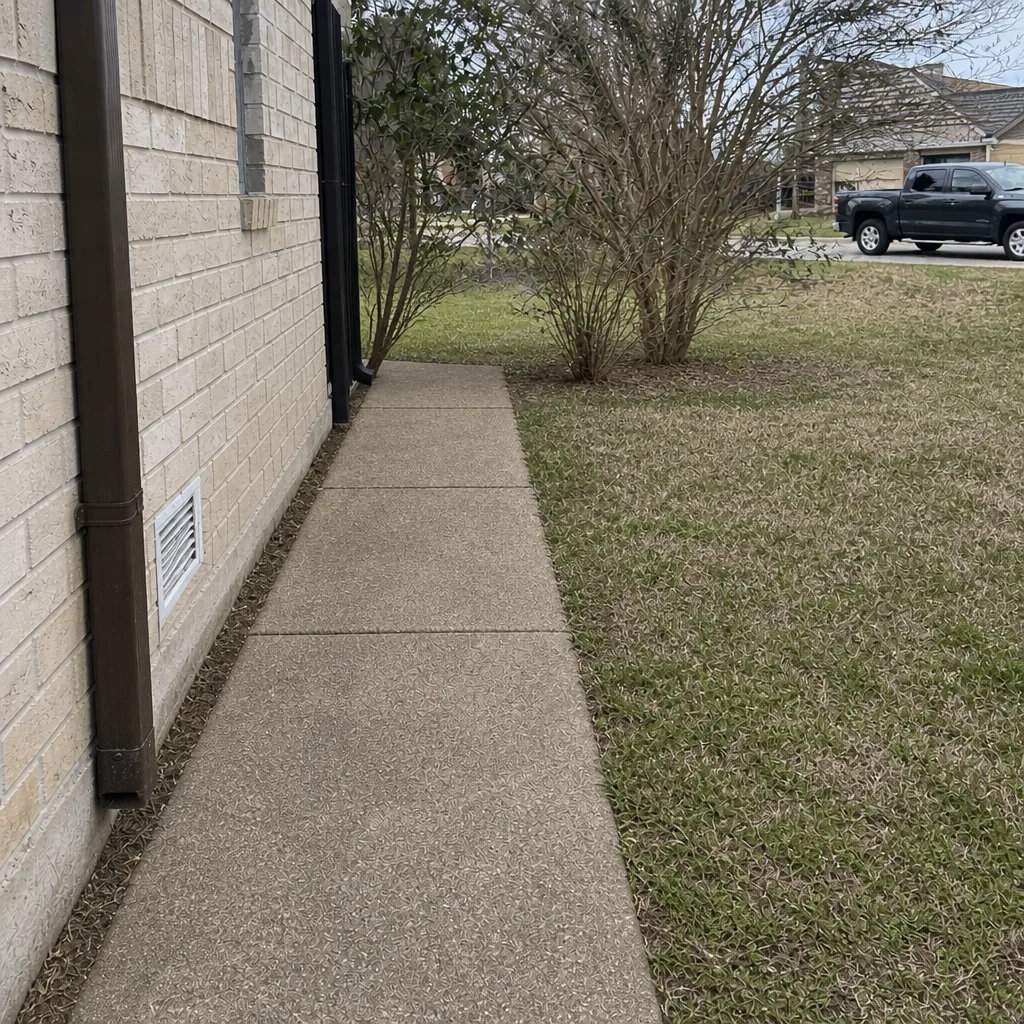 After
When to Call a Professional
Call a professional when you have a consistent smell on AC startup, when humidity stays elevated indoors with the system running, when one room’s airflow has gone weak and stayed that way, when you see dark staining or fast-returning dust at the registers, or when the dryer vent hasn’t been cleaned in a long stretch. Those are the signals that a homeowner can’t resolve by changing a filter. You’ll also want a professional if you’ve had a recent renovation, water intrusion, or a pest issue that may have affected ductwork.
Our technicians have up to 12 years of experience, and we carry Abatement Technologies equipment for jobs that need more than a standard cleaning. We connect Corpus Christi homeowners with independent, skilled local professionals who do the work. Ironside Duct Cleaning offers free estimates in Corpus Christi; call (833) 435-2252. We answer 24/7. Fast dispatch from 7am to 7pm, Sunday through Friday.
Frequently Asked Questions
Most Corpus Christi homes can go a few years between cleanings, but the humid climate here pushes the interval shorter for homes with older flex duct, mild leaks, or pets. The useful test is signs, not a calendar: a musty smell, humidity that holds indoors, or symptoms that flare at AC startup all say “soon” regardless of when the last cleaning was. Call (833) 435-2252 for an exact quote; estimates are free.
A low quote almost always rests on something the walkthrough didn’t cover: a per-vent price, a short hose that only cleans the reachable sections, or no equipment for negative-air containment. A professional job involves contact-vacuum brushing and negative-air equipment, and the price reflects that. We set one flat price per system, agreed before work starts. Call (833) 435-2252 for an exact quote; estimates are free.
Ask for before-and-after photos of the ducts, not just the registers. Our technicians take photos of the interior work on every job, so you can see the condition before and after. A company that can’t show you the interior is cleaning a surface you can already see. Call (833) 435-2252 for an exact quote; estimates are free.
No. High indoor humidity can come from weather and everyday activity, which is why a week of readings matters more than a single number. A duct leak is more likely when indoor humidity climbs with the AC running and a specific room or return is consistently worse. A professional inspection confirms it. Call (833) 435-2252 for an exact quote; estimates are free.
Yes. Air duct repair is a service we offer, so a crushed run, a disconnected joint, or a leaking seam gets fixed as part of the work rather than left in place. Cleaning a system with a structural defect leaves you with clean ducts and the same problem. Call (833) 435-2252 for an exact quote; estimates are free.
We answer 24/7. A call outside dispatch hours is booked into the next opening, Sunday through Friday, 7am to 7pm. We’re closed on Saturday, so a door that fails over the weekend gets booked for Sunday. Call (833) 435-2252 for an exact quote; estimates are free.
The Bottom Line
The warning signs that matter most in Corpus Christi ducts are the quiet ones: a musty smell at AC startup, indoor humidity that won’t settle, airflow that’s weak in one room, and allergy symptoms that track with the system rather than the season. Visible dust at the registers is real, but it’s late. Document what you’re seeing, change the filter and check again, and when the signs persist, get a walkthrough from someone with professional equipment. We connect homeowners with independent local professionals who clean, repair, and document the full air pathway. Call (833) 435-2252 for a free estimate. We answer 24/7. Fast dispatch from 7am to 7pm, Sunday through Friday.
Written by the team at Ironside Duct Cleaning.