
Last updated November 14, 2026
 Whole-home duct cleaning
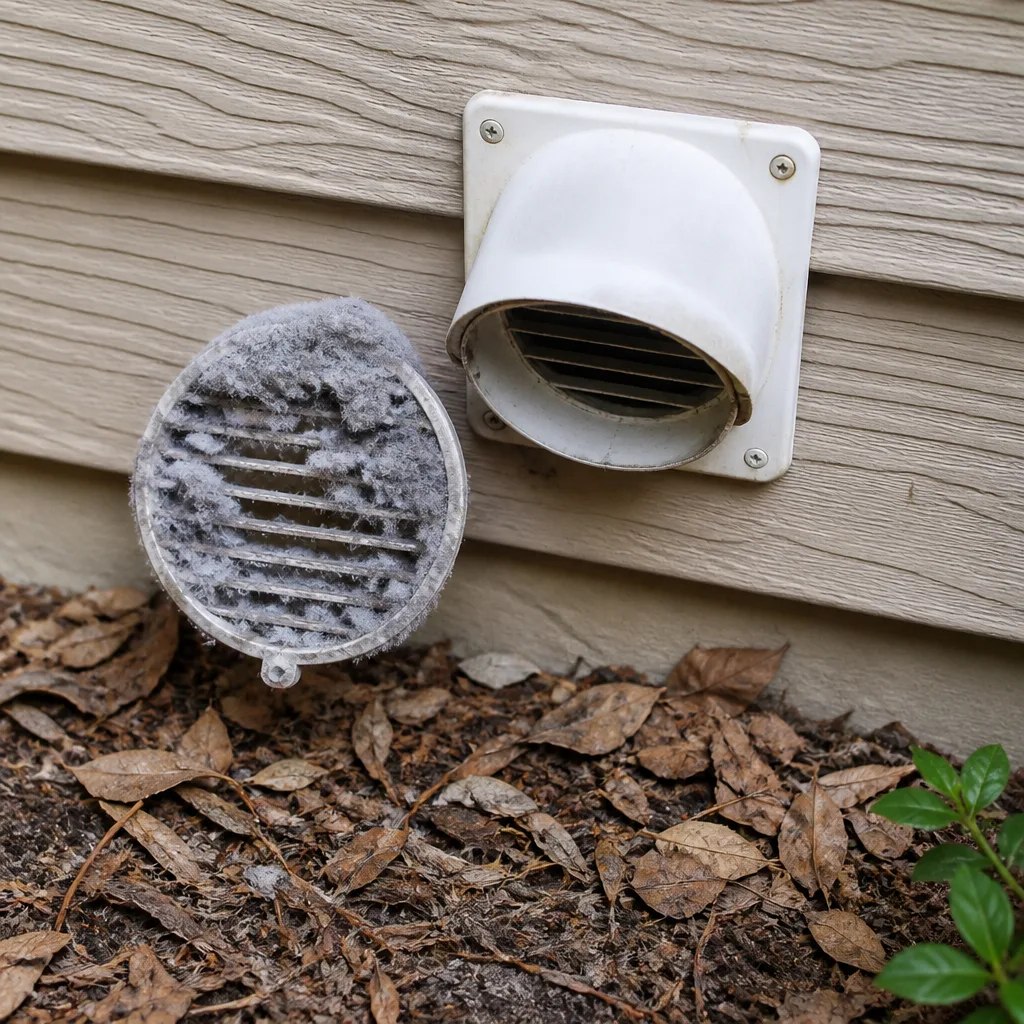 Dryer vent cleaning
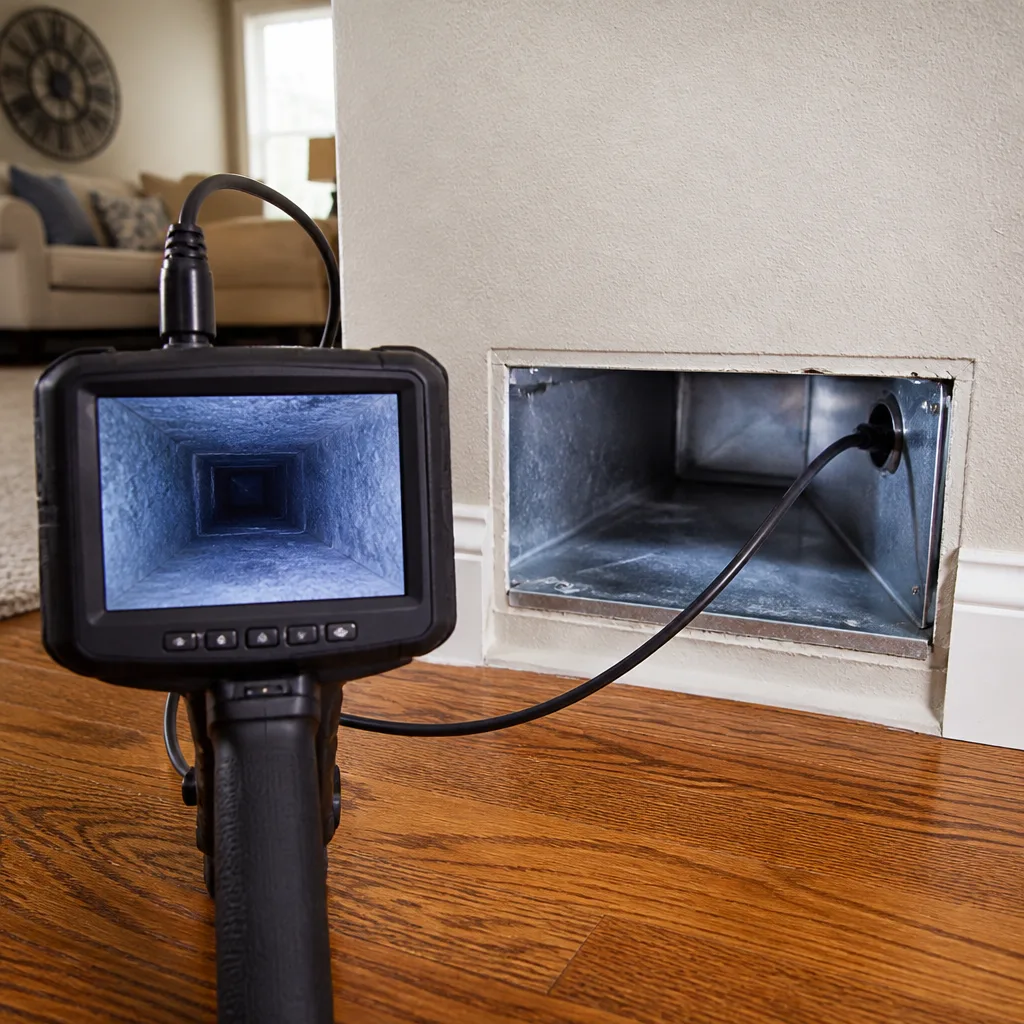 Camera inspection
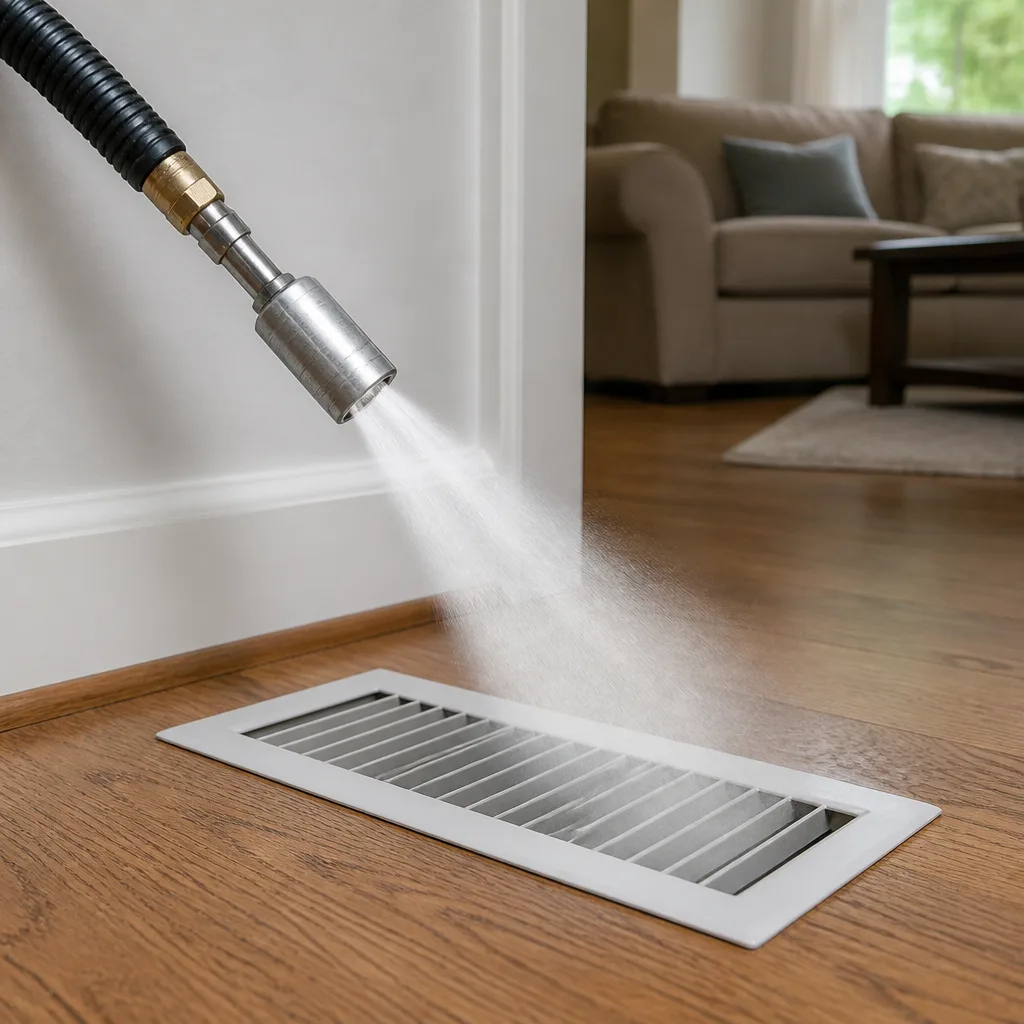 Sanitizing & deodorizing
Whole-system duct and dryer vent check with before-and-after photos - you see exactly what came out of your vents
That "$99 whole-house special" is a bait ad - the real number appears once they are in your hallway, or the "clean" is a shop-vac at the register. We photograph the inside of your ducts before and after instead.
Air Duct Cleaning Permits, Codes & Inspections in Corpus Christi, TX: What You Need to Know
Most homeowners treat duct cleaning as maintenance that never touches the permit desk. That’s usually right for cleaning. It stops being right the moment a contractor patches a disconnected trunk line, seals a joint with mastic, or replaces a run of flex duct. In Texas, that repair can cross into work that requires a licensed mechanical contractor and a municipal permit. Done without one, the paper trail can follow the house into a sale inspection or an insurance claim. This guide explains where cleaning ends and permitted work begins in Corpus Christi, who has jurisdiction inside the home envelope, and what documents you should hold onto afterward.
Quick Answer
Routine air duct cleaning in Corpus Christi generally does not require a permit. Repair, replacement, or alteration of ductwork usually does, because Texas regulates mechanical work under a state contractor license and the City of Corpus Christi issues the permit for work inside the home. Ask any contractor which side of that line their job falls on before work starts, and get the repair documented in writing so you have proof if you ever sell the house or file an air-quality claim.
Styles & brands we work with
- Whole-home duct cleaning
- Dryer vent cleaning
- Camera inspection
- Sanitizing & deodorizing
Table of Contents
- Cleaning vs. Repair: Where the Permit Line Sits
- Texas Mechanical Contractor Licensing: When Duct Work Becomes Regulated
- Who Has Jurisdiction in Corpus Christi and Nueces County
- How Unpermitted Duct Repairs Affect Insurance Claims
- The Paper Trail You Should Get After Any Repair
- Storm and Flood Remediation: When Inspection Requirements Kick In
- What a Duct Inspection Actually Checks
- How to Vet a Duct Contractor in Corpus Christi
Cleaning vs. Repair: Where the Permit Line Sits
The dividing line is simple to describe and easy to blur in practice. Cleaning removes debris from ductwork that is structurally sound. Repair changes the ductwork itself. Permits attach to the second category, not the first.
During a cleaning, a technician may find a disconnected trunk line, crushed flex duct behind a knee wall, torn insulation, or a joint that was never sealed. Fixing those problems is a mechanical alteration of the system. In Texas, that kind of work falls under mechanical contractor licensing and usually requires a permit from the local building department. Cleaning around the defect without fixing it is legal. It also leaves the problem in place.
Here’s how the split typically plays out on a Corpus Christi job:
- Cleaning only: contact-vacuum brushing of supply and return ducts, negative-air containment, dryer vent cleaning. No permit in the ordinary case.
- Cleaning plus sealing: mastic or tape applied to accessible joints. Small sealing jobs sit in a gray zone; larger ones lean toward permitted work.
- Repair or replacement: new flex runs, reconnecting a separated trunk, replacing crushed duct sections. This is mechanical work and is generally permitted.
- Equipment changes: adding or relocating a return, changing duct sizing, or altering the air handler connection. Permitted.
The permit isn’t a bureaucratic nuisance. It means a city inspector looked at the work and put a stamp on it. That stamp is worth a lot when a buyer’s inspector finds unpermitted ductwork years later.
Texas Mechanical Contractor Licensing: When Duct Work Becomes Regulated
Texas regulates air conditioning and ventilation work through a state mechanical contractor license. A company that designs, installs, repairs, or alters ductwork as part of a mechanical system is generally expected to hold the appropriate license and to pull permits for the work. A duct cleaning company that only cleans does not need that license for the cleaning itself, which is why so many cleaning-only operations exist.
This is where the market gets messy. Some Corpus Christi cleaning companies advertise full-service duct work and quietly subcontract the repair to a licensed mechanical contractor. Others do the repair with no license and no permit, which is the outcome you don’t want. When we clean a system and find a structural defect, we either handle the duct repair within our scope or tell you plainly that the job needs a licensed mechanical contractor. There’s no benefit to pretending the line doesn’t exist.
What counts as regulated repair, in plain terms:
- Replacing a section of flex or rigid duct.
- Reconnecting a trunk line that has separated from the plenum or a branch.
- Changing duct size, routing, or the number of supply or return points.
- Modifying the connection between the air handler and the duct system.
- Installing new ductwork as part of a remodel or addition.
Cleaning, on its own, is not on that list. Neither is dryer vent cleaning, which is a separate service with its own safety story. If a contractor tells you a routine cleaning needs a permit, ask why and get it in writing. If they tell you a duct replacement needs no permit, that’s a bigger red flag.
Who Has Jurisdiction in Corpus Christi and Nueces County
Building permits inside the Corpus Christi city limits are issued by the City of Corpus Christi’s building department. Work in unincorporated Nueces County falls under the county, which has its own permitting process and inspection schedule. A small number of adjacent jurisdictions have their own departments. The practical rule: the permit comes from whoever has jurisdiction over the address, and the contractor is responsible for pulling it.
What homeowners in Corpus Christi should know about how this affects them:
- The permit is pulled in the contractor’s name, not yours. You shouldn’t have to file paperwork for duct repair.
- The permit number and inspection record should be available to you on request. Ask for both.
- Permits tied to HVAC-adjacent work can trigger an inspection of the ductwork, the air handler connection, and sometimes the gas line if the job touches the furnace.
- If a contractor refuses to pull a permit for duct repair, that’s a signal the work isn’t going to hold up under inspection.
In our experience working Corpus Christi homes, the confusion usually isn’t about the permit rule itself. It’s about which jobs trigger a permit. A homeowner hears “duct cleaning” and assumes the entire visit is paperwork-free. A contractor who finds a disconnected trunk and fixes it on the spot has just done permitted mechanical work without the permit. Even when the repair is done correctly, the lack of a record becomes a problem later.
If you’re not sure whether your address is city or county, call the building department before work starts. It takes five minutes and settles the question.
How Unpermitted Duct Repairs Affect Insurance Claims
Homeowners insurance is where unpermitted work gets expensive. Insurers care about two things: whether the damage is covered under the policy, and whether the work that caused or contributed to it was done to code. Unpermitted duct work opens the door to a denial on the second question.
The claims most likely to intersect with ductwork:
- Water damage from a condensate leak: if a duct repair blocked the drain pan or altered airflow in a way that caused condensation, the insurer can argue the repair caused the damage.
- Air-quality claims after mold discovery: if a duct defect pushed moist air into the living space, the repair record matters.
- Fire claims tied to the dryer vent: an unmaintained dryer vent is a documented fire risk. Documentation of vent cleaning helps establish the maintenance history.
- Post-storm claims: if ductwork was opened up and repaired after a storm, the insurer may want to see the permit and inspection before paying for related damage.
None of this means a routine cleaning needs an insurance conversation. It means a repair does. If the work is significant enough to need a permit, tell your insurer the work was done and keep the paperwork. If it wasn’t permitted and you’re filing a claim, be honest about it. Insurers respond better to disclosure than to a surprise found during their own inspection.
Our advice is straightforward: any time duct repair is part of the job, ask for the permit number. If the answer is “we didn’t need one,” find out why before the work starts.
The Paper Trail You Should Get After Any Repair
A defensible record of duct work is worth holding onto indefinitely. Homeowners sell houses, refinance, switch insurers, and file claims years after a repair. The paperwork is what makes the difference between a clean file and a problem.
What to ask for after duct repair work in Corpus Christi:
- The permit number and issuing jurisdiction. A permit and inspection record in your file proves the work was reviewed.
- A written scope of work. What was repaired, what was replaced, and where in the system. This is not the same as an invoice line that says “duct repair.”
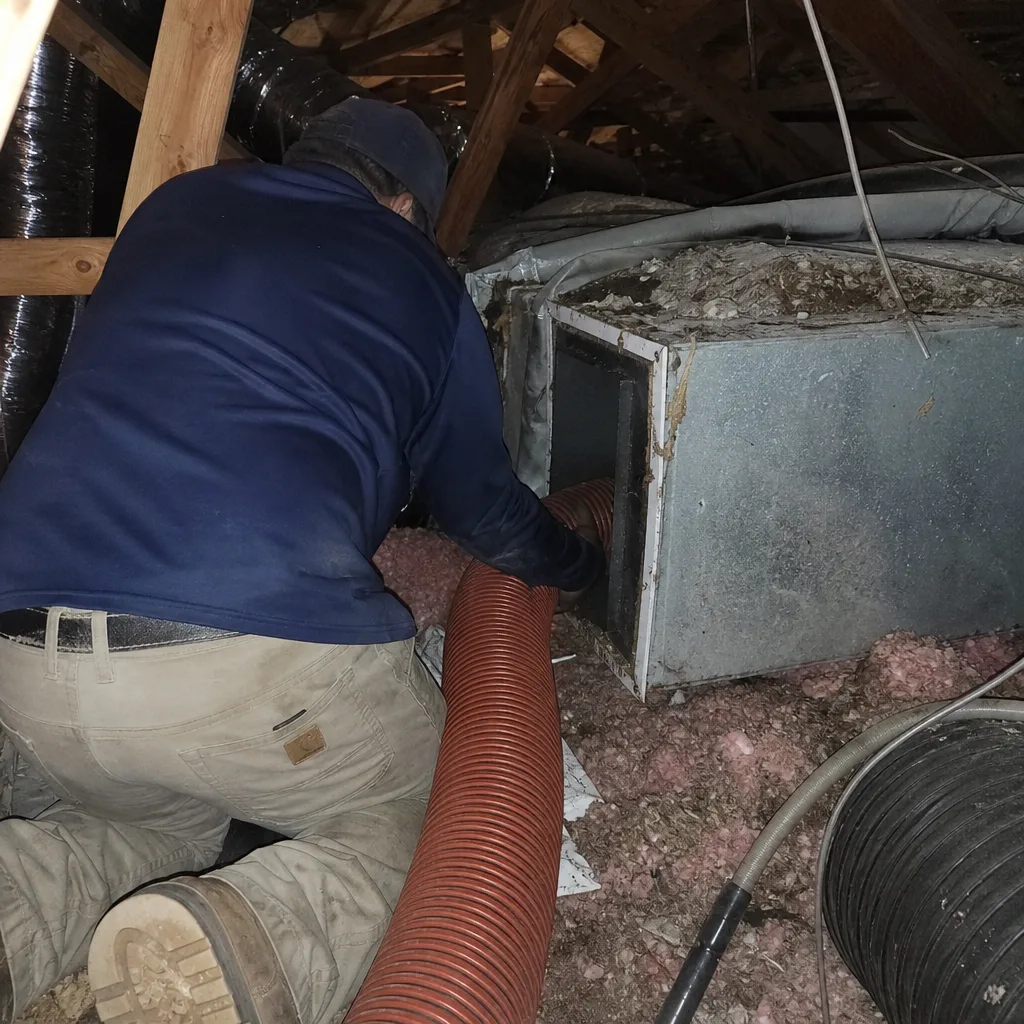
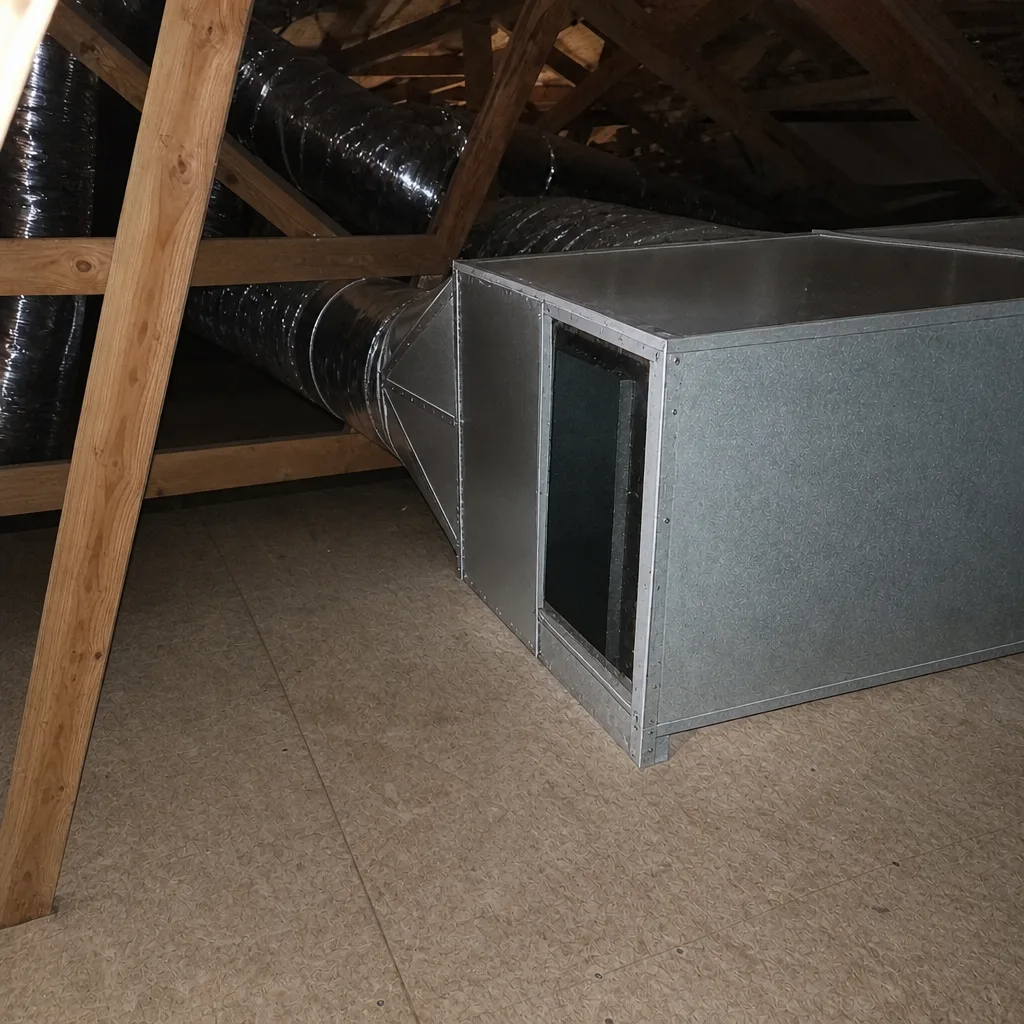
- Before-and-after photos. A contractor using professional equipment should be able to show you the duct interior before cleaning and after. Photos of your own system, not stock images.
- The inspection sign-off, if one was required. The city inspector’s approval is the document that means the work passed code.
- The estimate and the final invoice. Both. The estimate shows what you agreed to, the invoice shows what was done.
- Any equipment documentation. If filtration equipment such as a Honeywell or Aprilaire component was touched or replaced, keep the model information.
We send before-and-after photos of your own ducts after every job, whether or not repair was involved. It’s the simplest way to prove the work was done and to give you a record you can keep.
Storm and Flood Remediation: When Inspection Requirements Kick In
Corpus Christi sits where storms can put water into places it doesn’t belong, and duct systems are on the list. Wet insulation inside a duct, standing water in a low return, or a saturated plenum all change the job from cleaning to remediation. Remediation usually means opening up the system, drying it, replacing contaminated components, and reassembling. That reassembly is repair, and repair generally requires a permit.
The sequence that matters:
- Assess before you clean. Cleaning a wet duct spreads contamination. The system needs to be dry and structurally sound first.
- Document the water damage. Photos, moisture readings, and a written assessment. Your insurer will want all three.
- Get the permit for the repair. If ducts are opened, replaced, or reconfigured, the work is permitted.
- Inspect before the system is closed up. The city inspection needs to see the work, not just the finished result.
- Keep the files together. Permit, inspection, photos, invoice, insurance correspondence. One folder, one digital copy.
Negative-air equipment matters here. We use Nikro negative-air machines and Abatement Technologies filtration on jobs where contamination is the concern, not just dust. That’s the difference between a cleaning and a remediation, and the inspection record should reflect which one you had.
What a Duct Inspection Actually Checks
A duct inspection isn’t a look down a register with a flashlight. When the city inspects permitted duct work, or when a home inspector checks the system before a sale, the review has specific targets. Knowing what they are helps you spot problems before they do.
- Connections: trunk lines connected to the plenum, branches connected to trunks, no gaps at the air handler.
- Sealing: joints sealed with mastic or approved tape, not just slipped together.
- Support and routing: flex duct supported and routed without sharp bends or crushing.
- Insulation integrity: duct insulation intact, no condensation issues.
- Clearance and access: the system accessible for cleaning and service.
- Return air path: return sized and connected correctly, not drawing from an unintended space.
A home inspector doing a pre-sale check will flag unpermitted duct work as a finding. The buyer’s lender may then require it to be permitted retroactively or corrected before closing. The cost and delay sit with the seller. This is the scenario that makes the permit question worth asking on the front end.
Professional equipment helps here too. A contact-vacuum brushing system like Rotobrush lets a technician reach the full interior of a duct run, which is where defects show up. If you’re having the system inspected, having it cleaned and inspected in the same visit is the more efficient path.
How to Vet a Duct Contractor in Corpus Christi
The permit conversation is a useful test of a contractor’s seriousness. A company that knows where cleaning ends and repair begins is a company that can answer questions without getting defensive. Our technicians have up to 12 years of experience, and the questions below are the ones we expect from a careful homeowner.
- Ask what triggers a permit. If the answer is vague, that’s a problem. Duct replacement and trunk reconnection are permitted work.
- Ask who pulls the permit. The contractor, in their name. You shouldn’t be doing the paperwork.
- Ask for photos of your own system. Before and after, of your ducts. Not stock photos.
- Ask what equipment they use. Professional contact-vacuum and negative-air systems, not consumer-grade blowers. Ask for the brand.
- Ask whether repair is in-house or referred out. Both answers are fine. A contractor who says they refer out is being honest about their scope. A contractor who claims full capability but can’t explain how a trunk line gets reconnected is not.
- Ask what documentation you get at the end. Permit number if applicable, written scope, photos, invoice.
- Ask about pricing structure. A flat price per system agreed before work starts, not a per-vent price that changes once the technician is on site. That’s the bait-and-switch pattern this industry is known for, and it’s worth asking about up front.
We work within the Honeywell and Aprilaire product ecosystems, so if your system has filtration equipment from either brand, we understand the full air-treatment chain. That doesn’t make us a mechanical contractor. It makes us a specialist who can tell you when the job needs one.
Common Mistakes to Avoid
- Assuming “duct cleaning” covers duct repair. The two are different jobs with different permit requirements. Ask which one you’re getting before you book.
- Letting a contractor fix a disconnected trunk on the spot without a permit. The repair might be perfectly done, but without the permit record it can become your problem during a sale or claim.
- Cleaning a wet duct after a storm. Cleaning a saturated system spreads contamination. Dry it and assess it first, and treat the repair as permitted work.
- Skipping the before-and-after photos. Photos of your own ducts are the proof the work was done. Without them, you’re relying on the contractor’s word.
- Not keeping the permit and inspection record. The paperwork is the point. File it with your home records, not in a drawer of old receipts.
- Filing an insurance claim without checking whether the duct work was permitted. If a claim touches air quality or water damage, the permit record matters to the adjuster.
- Hiring on price alone. A low price that becomes a much larger invoice after the technician arrives is the industry’s most common complaint. A flat price per system agreed in advance avoids the whole problem.
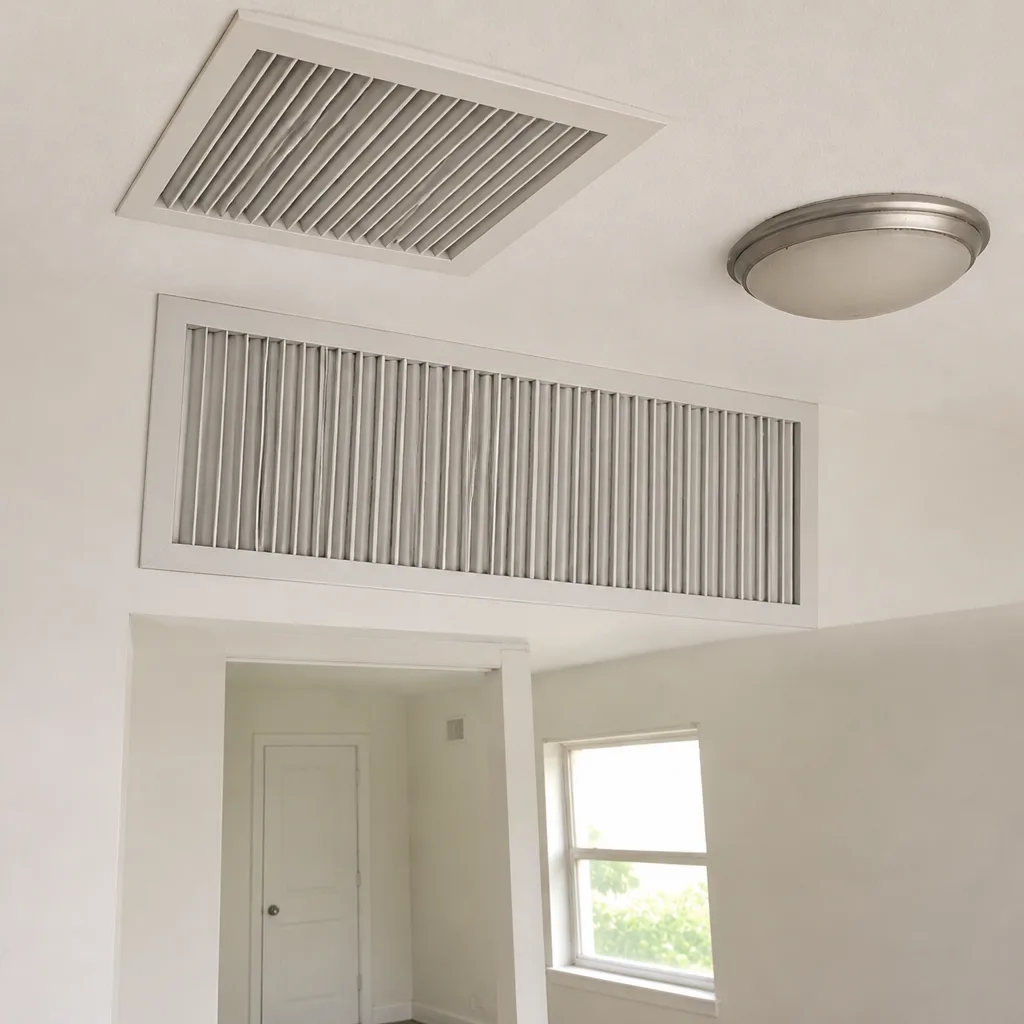
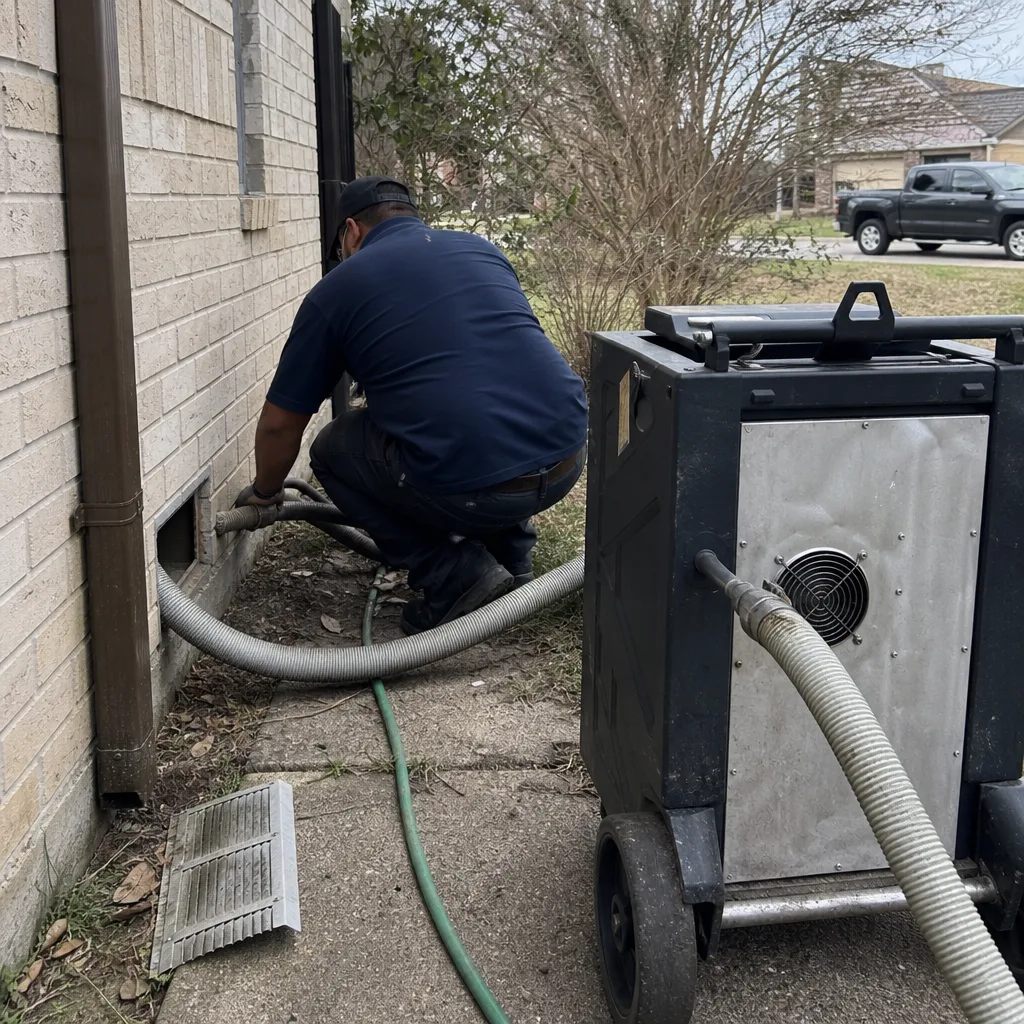
See the difference
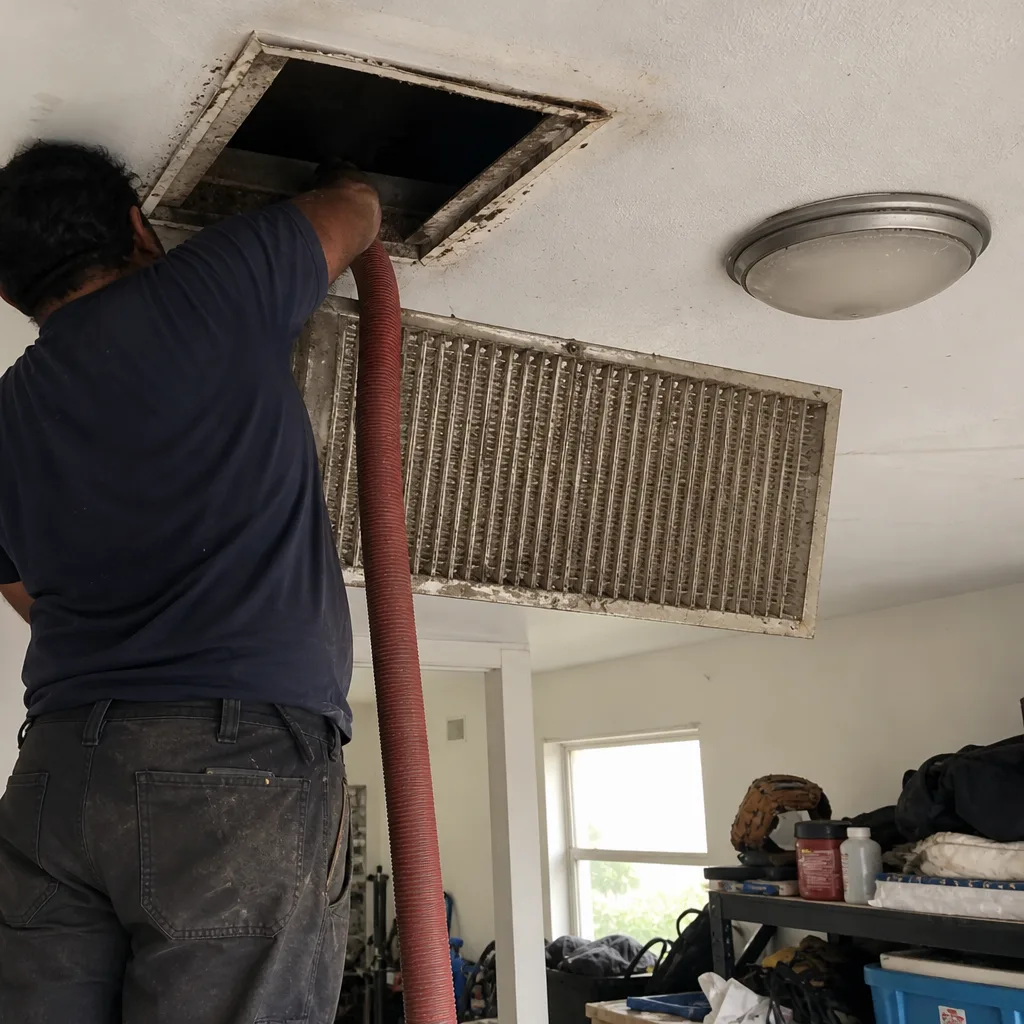 Before
 After
 Before
 After
 Before
 After
When to Call a Professional
Call a professional when you find visible contamination in registers, persistent odor in the air path, uneven airflow between rooms, or a dryer vent that hasn’t been serviced in years. Call before you clean if the system has been wet from a storm, because the assessment has to come first. Call when a contractor proposes a repair and you’re not sure whether it needs a permit. Call when you’re selling the house and the inspector has flagged the ductwork. Ironside Duct Cleaning offers free estimates in Corpus Christi. Call (833) 435-2252. We answer 24/7. Fast dispatch from 7am to 7pm, Sunday through Friday.
Our scope is specific: air duct cleaning, dryer vent cleaning, and duct repair. We don’t install HVAC systems and we don’t do mold remediation contracts. When a job crosses that line, we tell you.
Frequently Asked Questions
Routine air duct cleaning in Corpus Christi generally does not require a permit. Cleaning is not a mechanical alteration, so it doesn’t fall under the permit requirements for duct repair and replacement.
Yes, in most cases. Replacing duct sections, reconnecting a separated trunk line, changing duct routing, or altering the air handler connection is mechanical work that generally requires a licensed mechanical contractor and a permit from the local building department.
Unpermitted duct work can become a problem during a home sale, when an inspector flags it and the buyer’s lender requires correction, or during an insurance claim, when the insurer reviews whether the work was done to code. Getting it permitted retroactively or corrected is possible, but it’s easier and cheaper to pull the permit up front.
The contractor is responsible for pulling the permit in their own name. If a contractor asks you to pull the permit or suggests skipping it, that’s a sign the job isn’t going to hold up under inspection.
Yes. Remediation that involves opening, drying, replacing, or reconfiguring the duct system is repair work and is generally permitted. The assessment and documentation of the water damage should come first, then the permit for the repair, then the inspection before the system is closed up.
Ask for the permit number and issuing jurisdiction, a written scope of work, before-and-after photos of your own system, the inspection sign-off if one was required, the estimate, and the final invoice. Keep everything together for future sale or insurance purposes.
The Bottom Line
Cleaning is maintenance. Repair is mechanical work. Texas treats those differently, and so should you. A permit on duct repair is not a formality: it’s the record that proves the work was done correctly, protects you during a sale, and holds up under an insurance review. Ask any contractor which side of the line a job falls on. Get the permit number, the written scope, and the photos when repair is involved. And when the system needs cleaning, repair, or both, call a specialist who knows the difference. If you’re in Corpus Christi, we can help you sort out which is which. Start with Corpus Christi or give us a call. Call (833) 435-2252. We answer 24/7. Fast dispatch from 7am to 7pm, Sunday through Friday. Estimates are free, and the written estimate sets the final price.
When you’re ready to book, reach out through Ironside Duct Cleaning. We’ll walk the system, tell you what needs cleaning, what needs repair, and what needs a mechanical contractor, and put it all in writing.
Written by the team at Ironside Duct Cleaning.